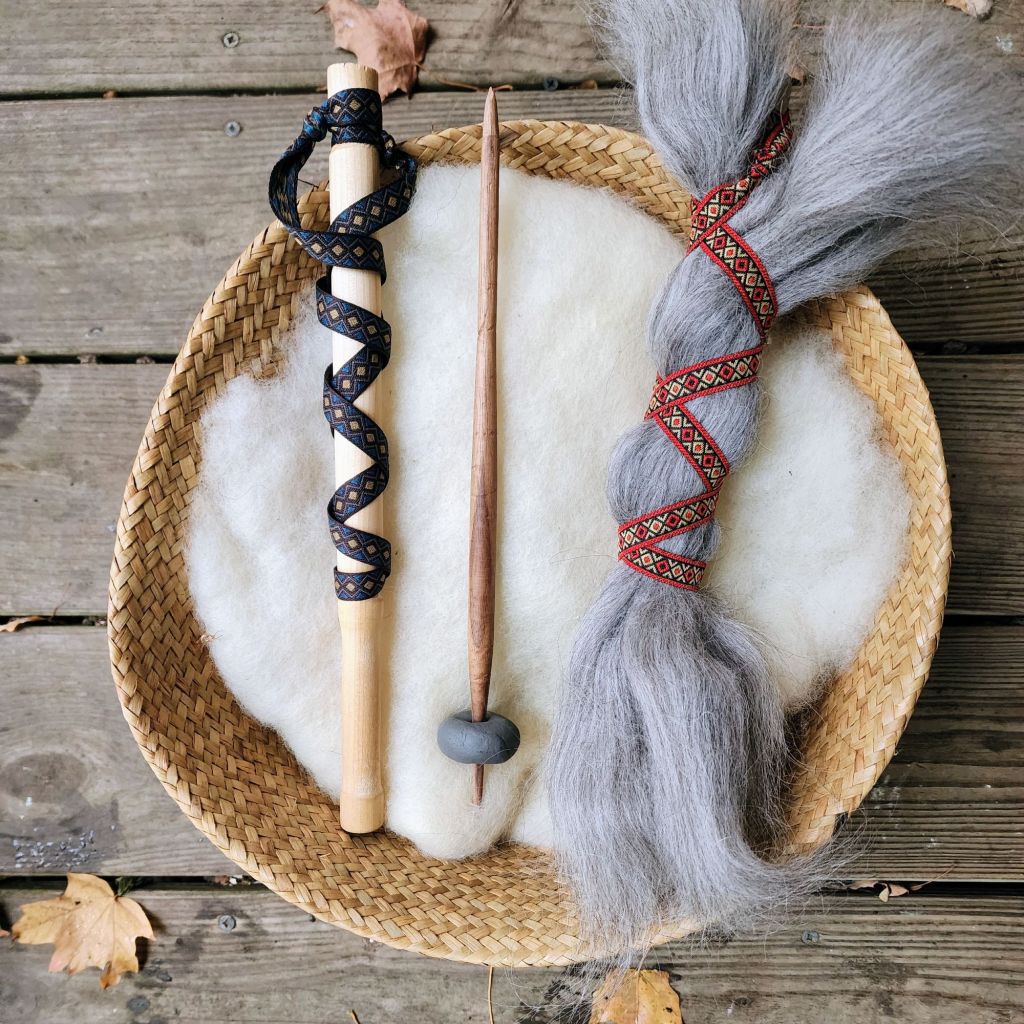
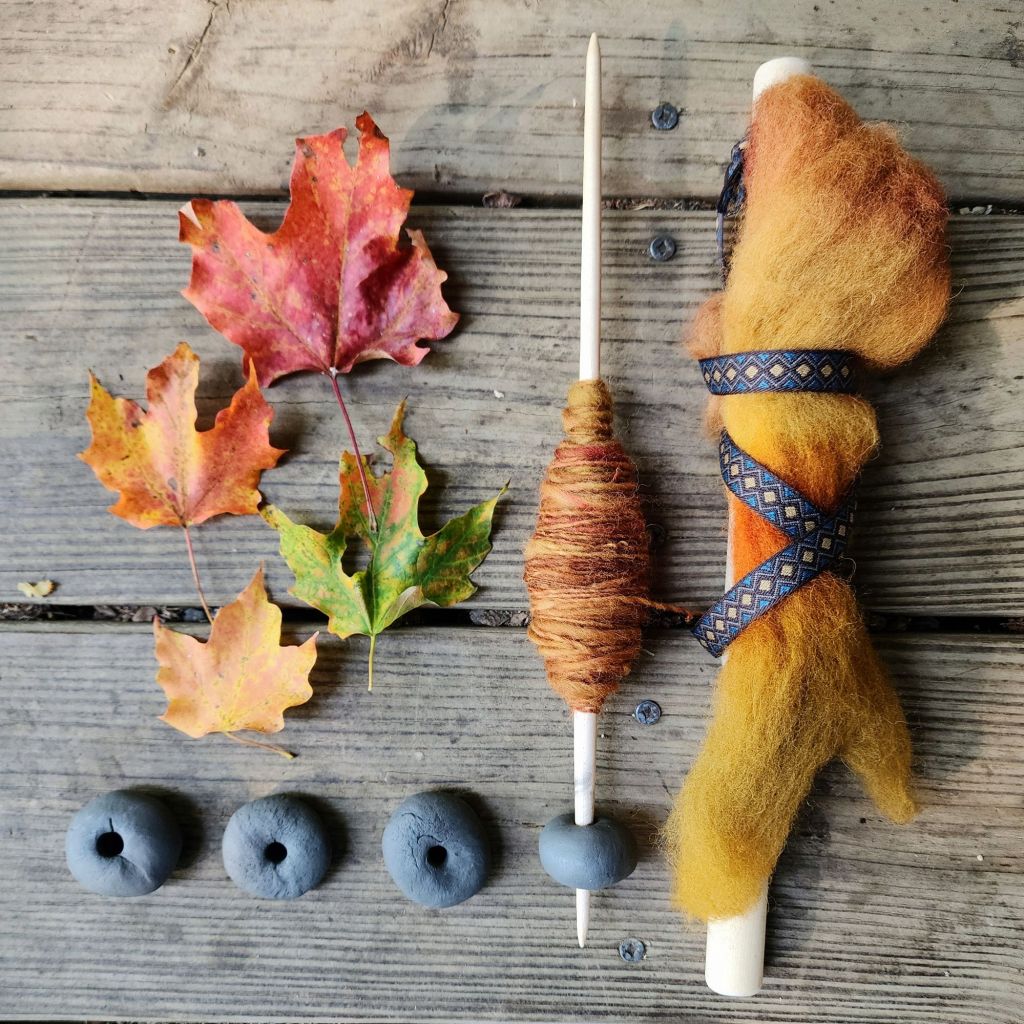
This is our Spin Like a Viking kit
It’s our best seller!
And sales have averaged from between a few a week to a few a day since we started selling them Sept 2025
It started when I was asked to apply for a demonstrators spot at the 2024 WNY Fiber Arts Festival. I applied to demo distaff spinning with a drop spindle, but wanted to be more historically accurate to the time period distaffs were used. So, with a month to prepare I started researching spindles
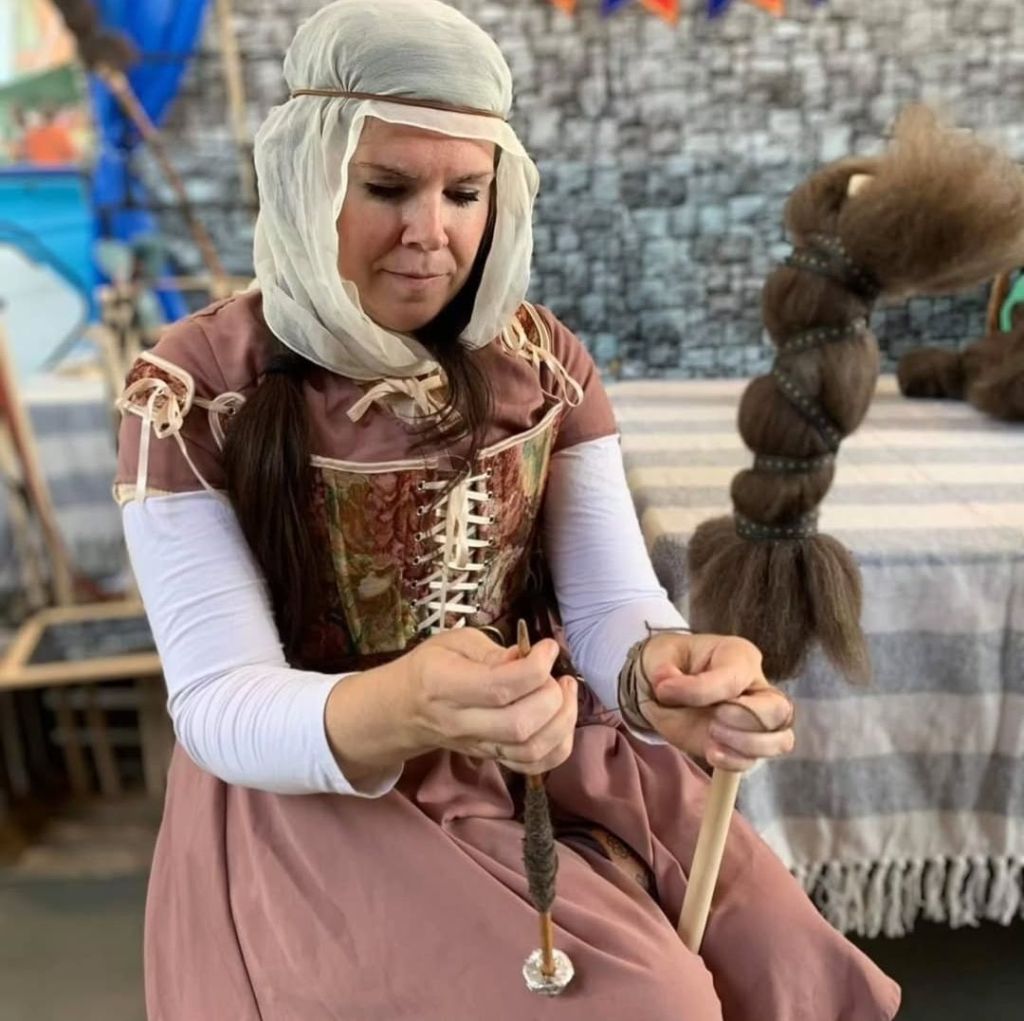
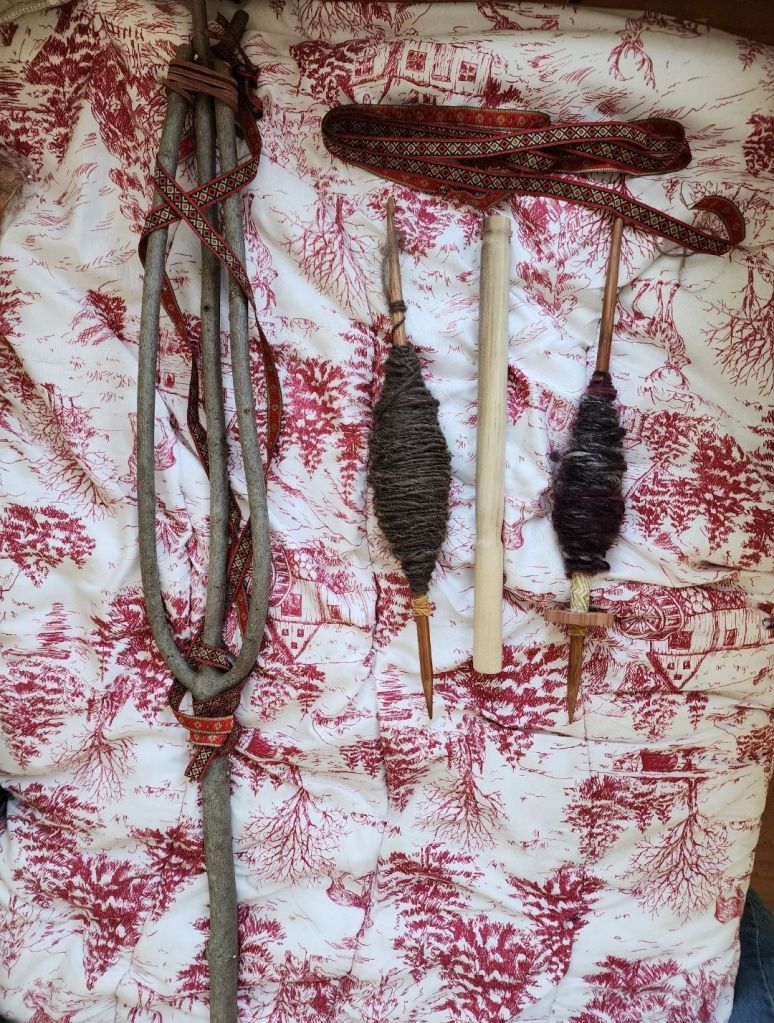
My first spindles were hand sanded bamboo dowels. I made a handful, some notched some not notched. And tried a bunch of things for whorls
I made this basket distaff out of a branch, and made some belted and hand distaffs out of dowels just to see if anyone would be interested in buying one.
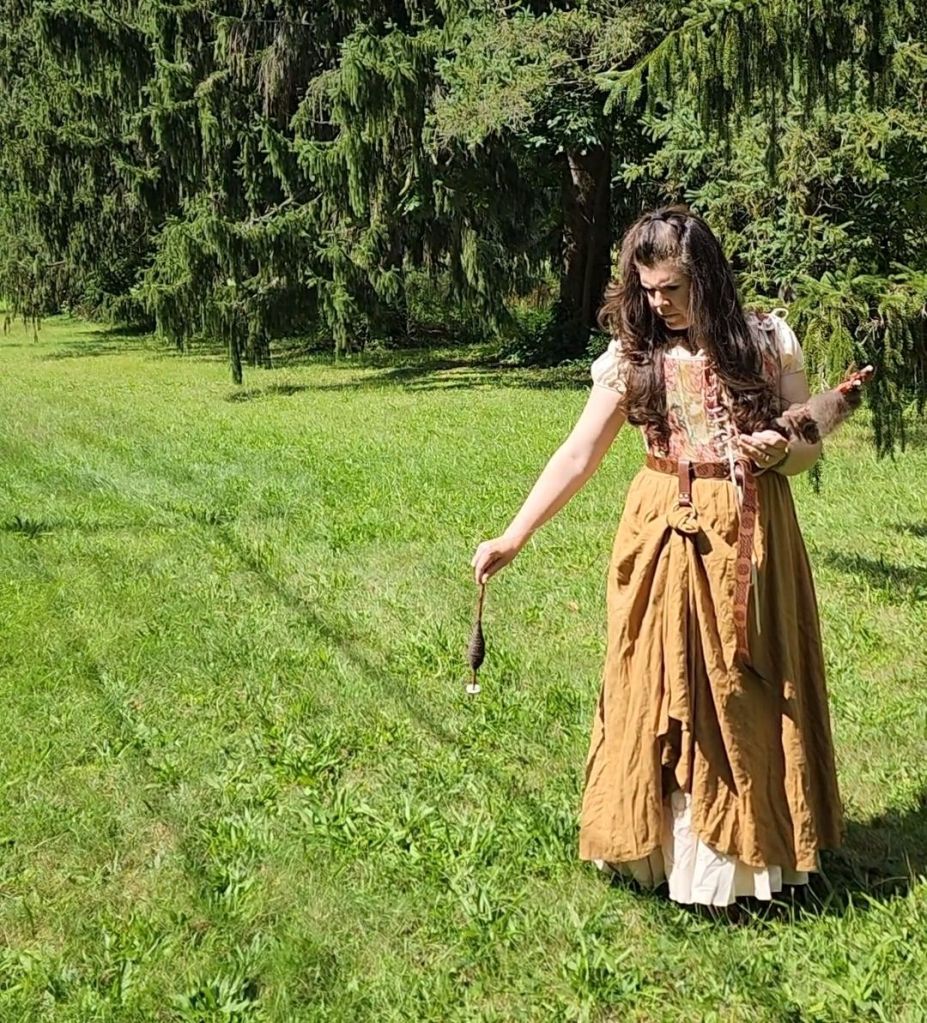
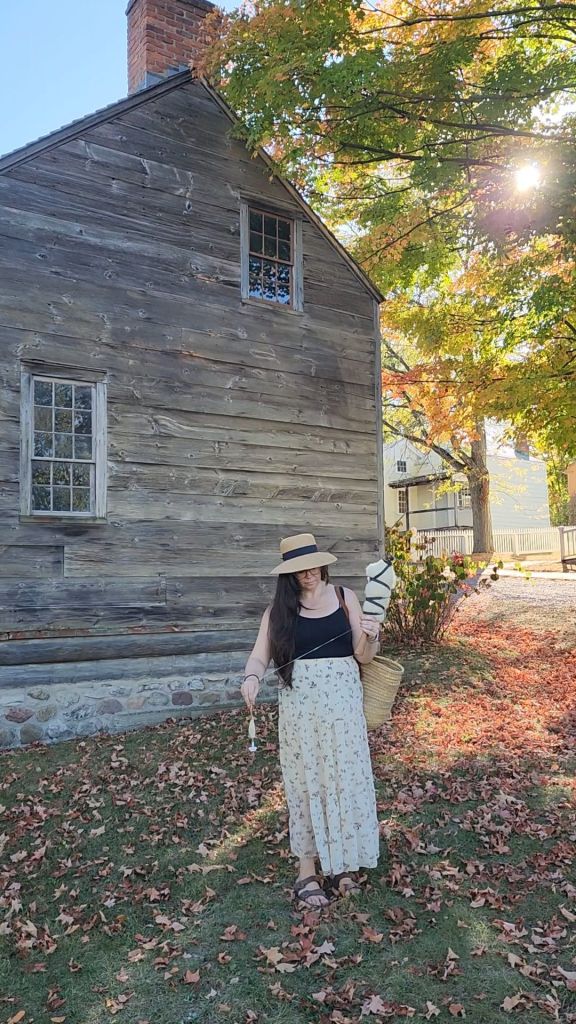
This photo was just an hour or two after I had sort of mastered suspended spinning while walking, hence the concentration face.
It’s surprisingly hard at the beginning! Sort of like rubbing your head and patting your stomach. But once it “clicks” it’s like riding a bike.
Flash forward to the summer of 2025 and I was preparing to teach a class on how to Spin Like a Viking at that same event, which meant I had to polish up on the Viking specific aspects of this style of spinning
History nerd powers, engaged!
I found the Oseberg nostepinnes, which looked a lot more like distaffs, to me and apparently a lot of spinners. The short one clocks in at just 13 inches. Very similar to the 12 inch distaffs I had made last year.
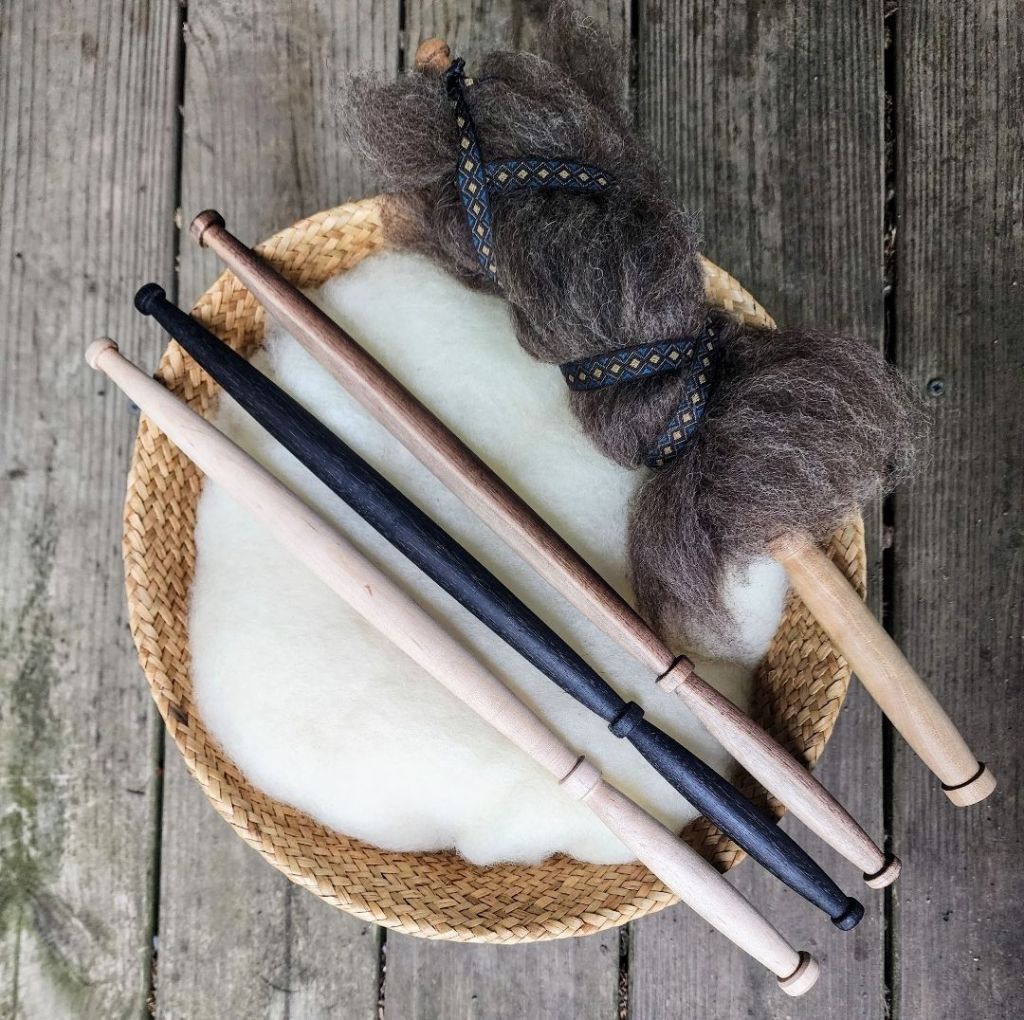
The Oseberg style distaffs other modern makers were offering were 16 inches, but the 12-13 inch ones are significantly lighter, and easier for students.
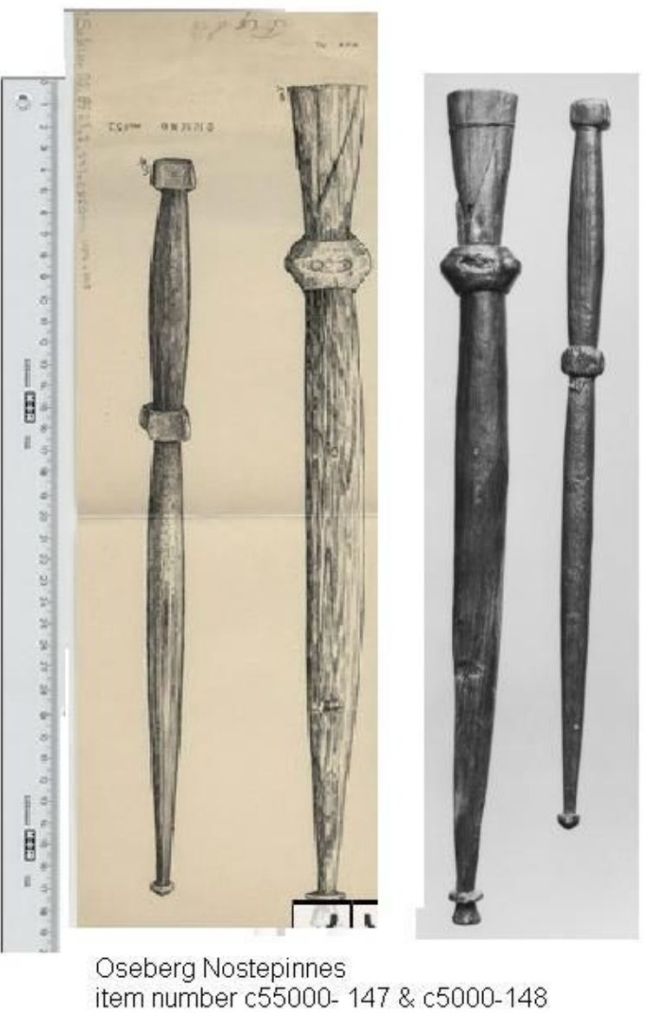
The Oseberg nostepinnes are part of the findings from a woman viking’s burial site.
Perhaps a Viking routinely used both small and larger varieties, which is why she was buried with both! Like these, our larger Oseberg style distaffs, and our smaller viking kit distaff. The Viking distaff we also offer with a finer finish, you’ll find on our etsy store as a “Mini”
A wee note here: If you are doing your own research, you’ll also see the Lendbreen distaff, at around 24 inches, which was found in a mountain pass. We know all fiber tools were hand made specifically for the user, perhaps by family members, and may have varied from tribe to tribe or even person to person. Or perhaps like the Oseberg burial findings, spinners owned more than one size. My own findings in living with distaffs and Viking/medieval spindles, I find I do grab bigger distaffs for longer travel because not only to they act as a third hand, they also keep a larger amount of fiber both safe and organized. Did they use small distaffs at home, and larger ones for travel? Maybe!
I was also able to get a bunch of lead whorls found by a metal detector user in Europe!
I have since found that these are sometimes stolen off private land, so I wouldn’t do it again.
But I was able to test drive a lot of these, what an amazing learning experience! And I cherish them so much, maybe I will be buried with them 🙂
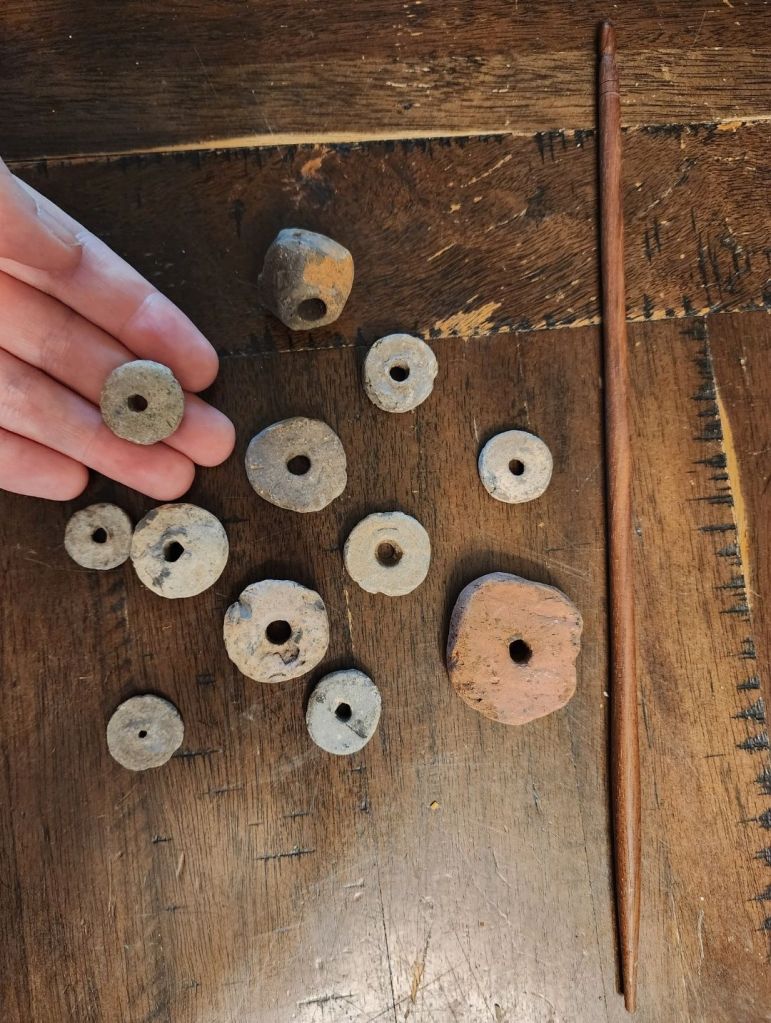
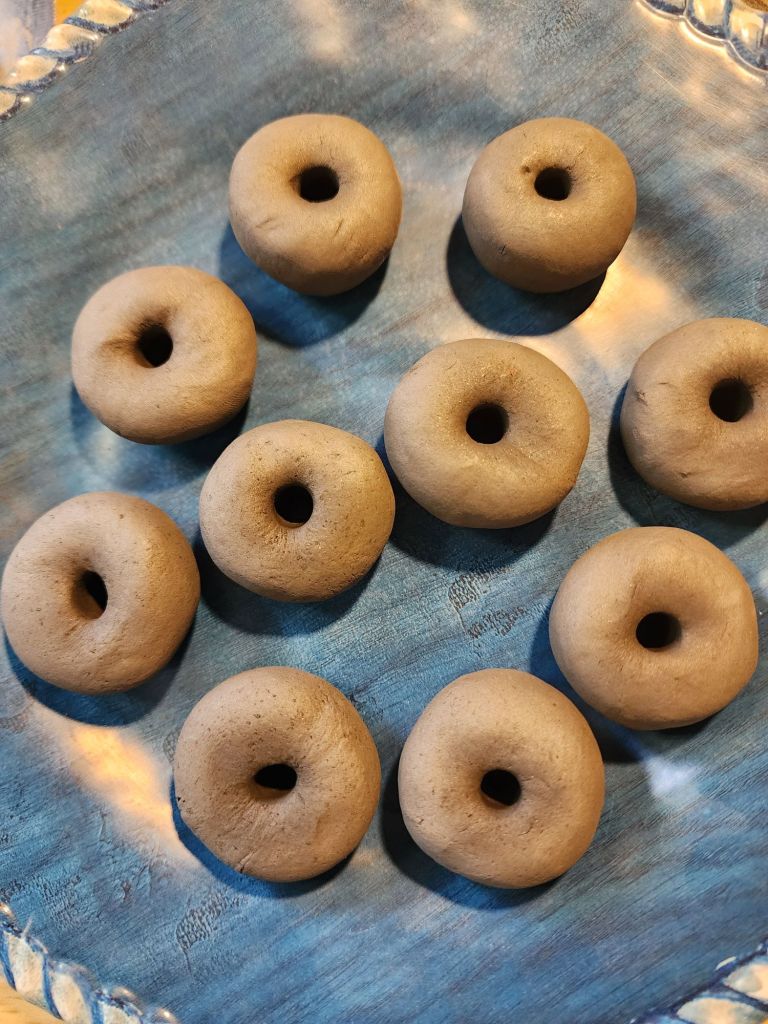
Going off how the lead whorls and a few included clay whorls spin, and how much they weigh I was able to make whorls that behave similar to those artifacts.
They are made with a high quality airdry clay which keeps the cost down, while also having a nice weight to them.
Whorls in the Viking era were made from lead, clay, glass, bone, antler, and I’m sure other things!
I combed through the British museum digital archives for hours and hours and more hours. It was in liu of social media, and it’s actually very fun.
I was looking at spindles.
Unsurprisingly, they have spindles from all over the world! And based on what I saw there, in both artifacts and artwork, and my own experiments, I landed on an 11 inch or so spindle and a low whorl.
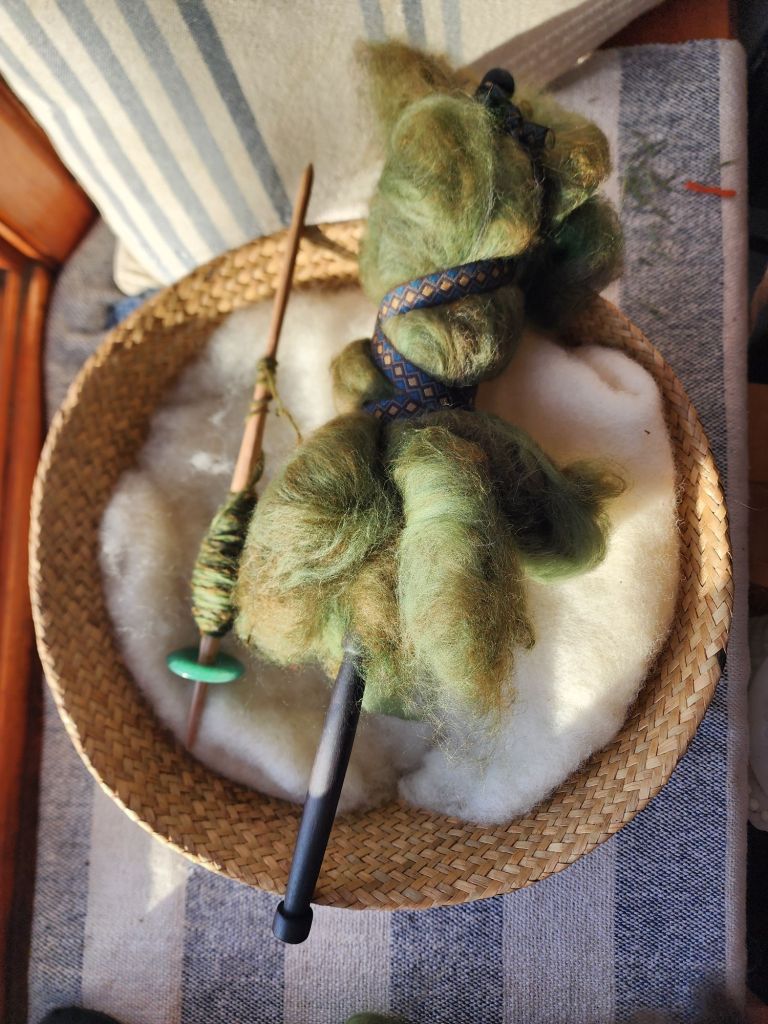
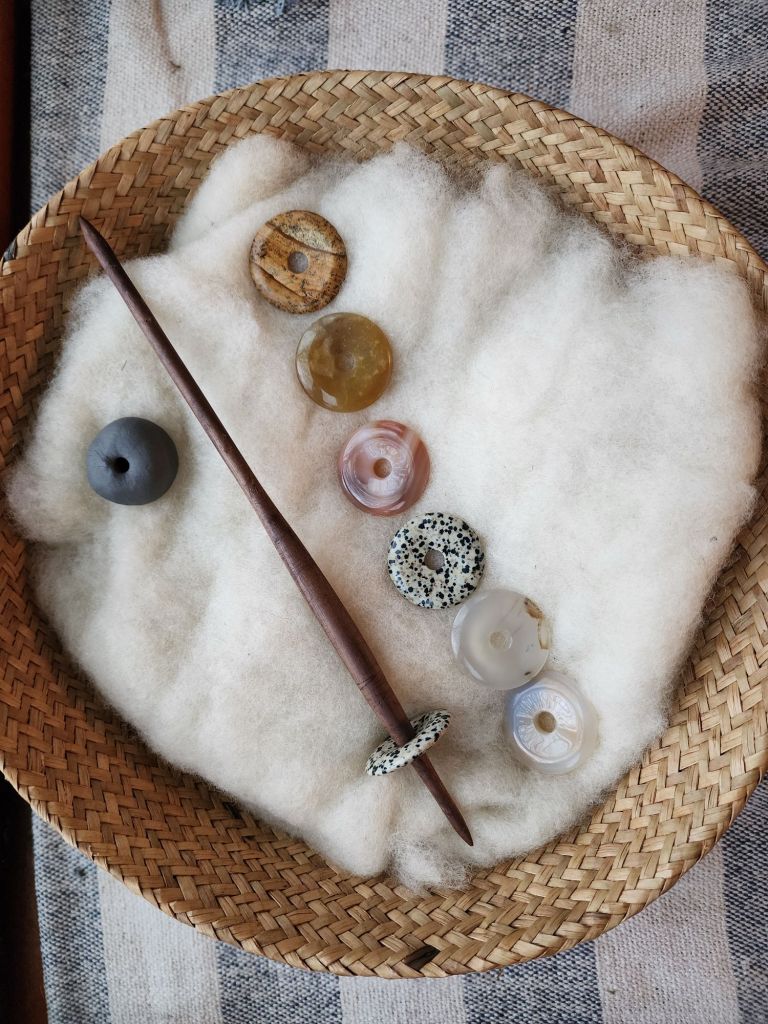
In order to accommodate lots of whorl hole sizes, from clay to stone to whatever a customer may want to put on there, I leave a bulge in the middle of the spindle so thicker and thinner holed whorls will fit.
They hold with tension really well, with just a little twist and push to keep them snug, or to remove them.
The ribbons were another lesson in experimentation.
A satin ribbon is way too slippery. And speaking of slippery, a very finely sanded distaff is also going to be too slippery to hold your fiber!
Jacquard or woven ribbon is very grippy, and happens to look more historically appropriate as well!
A win-win.
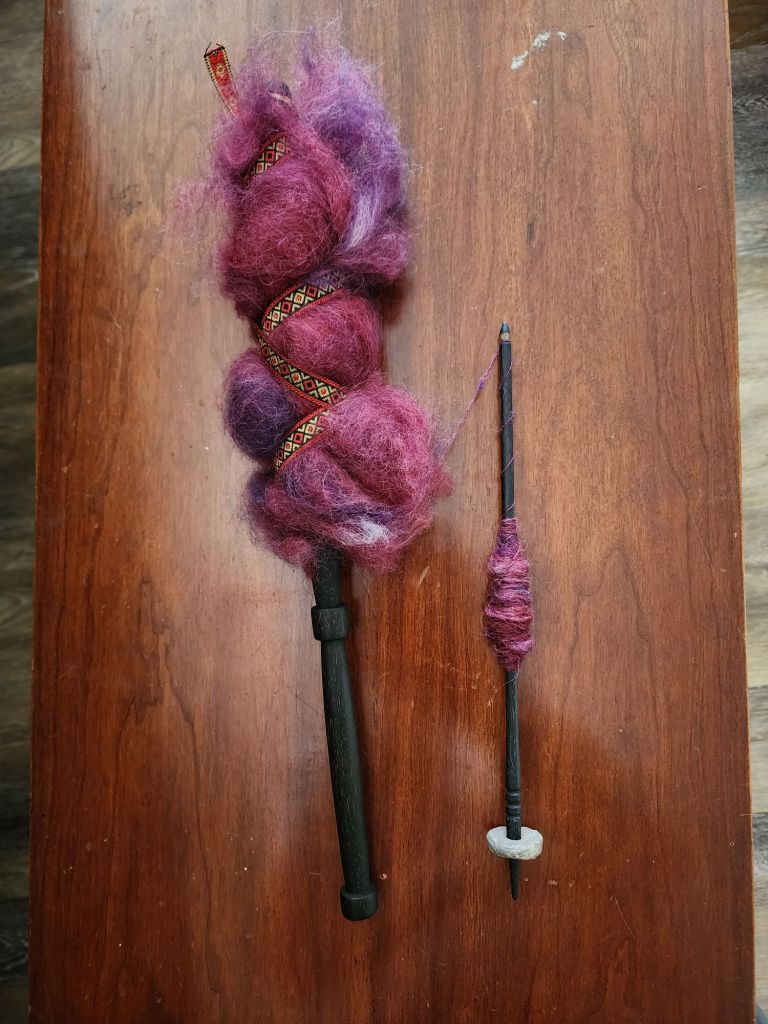
What wool did the Vikings use is a super interesting topic!
The Icelandic breed was taken by Vikings to Iceland and left there, so it figures they would be the truest to the original.
However! The Viking Museum in Sweden says Viking textiles had garments with very fine wool, and garments with coarse wool, but the record of sheep at that time shows coarse wool breeds being their dominant sheep livestock.
Were they importing fine wool?
The Viking Museum historian didn’t make it sound like they had a definitive answer to that question.
We do know that they were trading a lot, and at times traveling over seas with sheep, so there’s not really a way to tell.
I offer Icelandic wool at any rate.
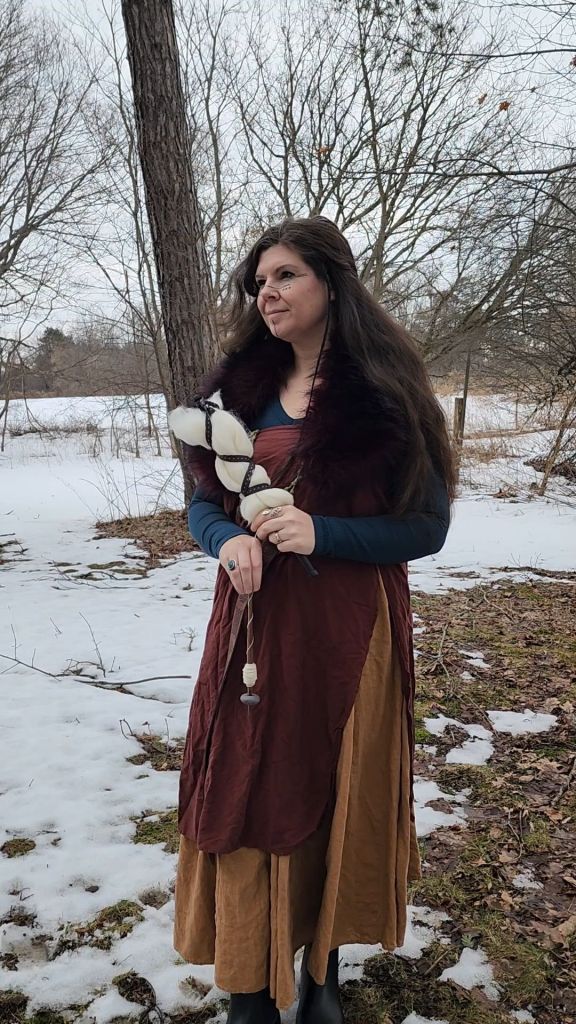
Overall I find this particular way of spinning very fun and very comfortable for the most part.
There are a few ways to hold the spindle, and although I do a lot of spinning the way I show in tutorials on my youtube page, I’m still not satisfied that that’s exactly what the Vikings did.
The skin between my first two fingers on my spinning hand gets raw after a while, especially with a heavy lead whorl. Did they develop a callous there? Or did they spin grasped, never letting the spindle hang at all…?
That’s for another post!
Thanks for hanging around and taking this little history journey with me! It’s been very fun so far with no signs of slowing down any time soon! I’d love to get some more posts up, going through the lead whorls and all their different attributes, and doing more experiments with all sorts of aspects in this kit and in the broader world of historical spinning. So stick around!
Happy Spinning!
 The Apple Creek Farm
Leave a comment