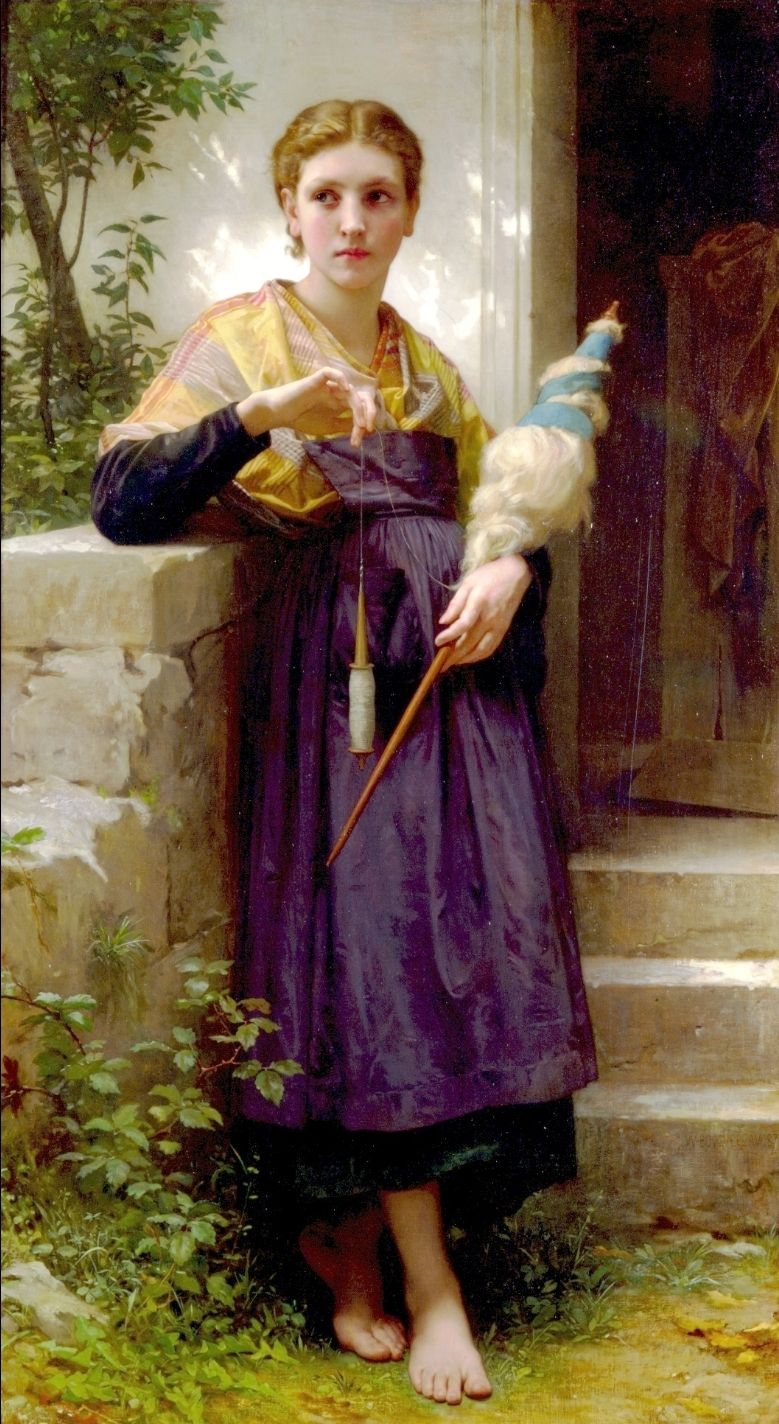
Hello! Today I want to chat about this style of spindle, which I am still playing with. It’s inspired by the photo
The Spinner
by William-Adolphe Bouguereau
Painted in 1873
What I am learning is that by the later 1800s scenes like this were seen as traditional, and paintings of these scenes sold more because it was a romanticized idea of the past. Which means at best the tools in use in this painting were still being used in the poorer peasant areas far removed from the city, and at worst just antiques laying around and used as props. From what I can tell there were still people using these tools here and there at this point, but no one can say for sure, especially for each particular painting that features old-fashioned things around this time. Just for some context, by the 1850s cotton textiles were predominantly made commercially in Europe, and similar things were moving from hand made to commerical made very quickly.
Setting that aside, we do see here a tool in use! And what I am focusing on is the spindle. At first glance what I think is that it was lightweight, which follows other french spindle designs of the time. It lacks the heavy lead whorl of medieval european designs, and if made only from wood seems like it would be very light.
The other trouble with these things is that we don’t know how much artistic license was taken with what we are seeing! Are the ratios right? Did the artist paint it smaller than it was to highlight the spinner herself, or vise versa? Are the elements of the spindle painted more dainty and thin than they were in real life, or thicker? We can only guess!
And guess I did!
I started with a thin maple version that blended the styles of other french spindles with the idea of a lightweight bobbin spindle.
It didn’t spin well until it had a bit of yarn wound around it, but it didn’t take much yarn to get to that point, then it spun really well and the light weight made it an absolute pleasure.
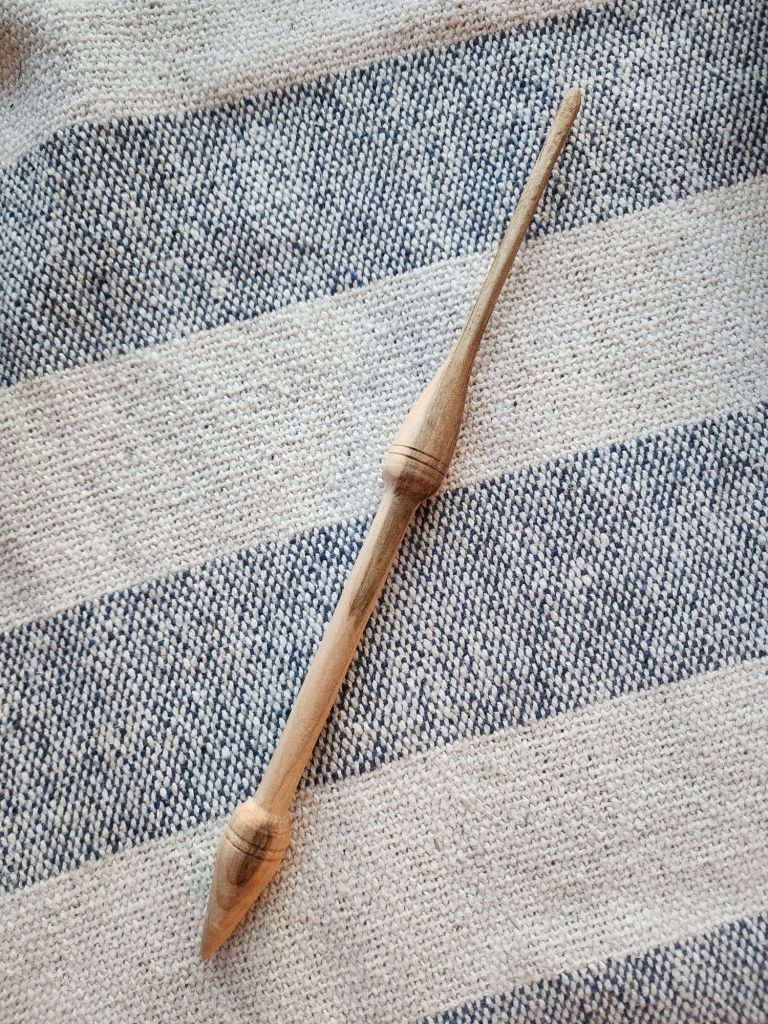
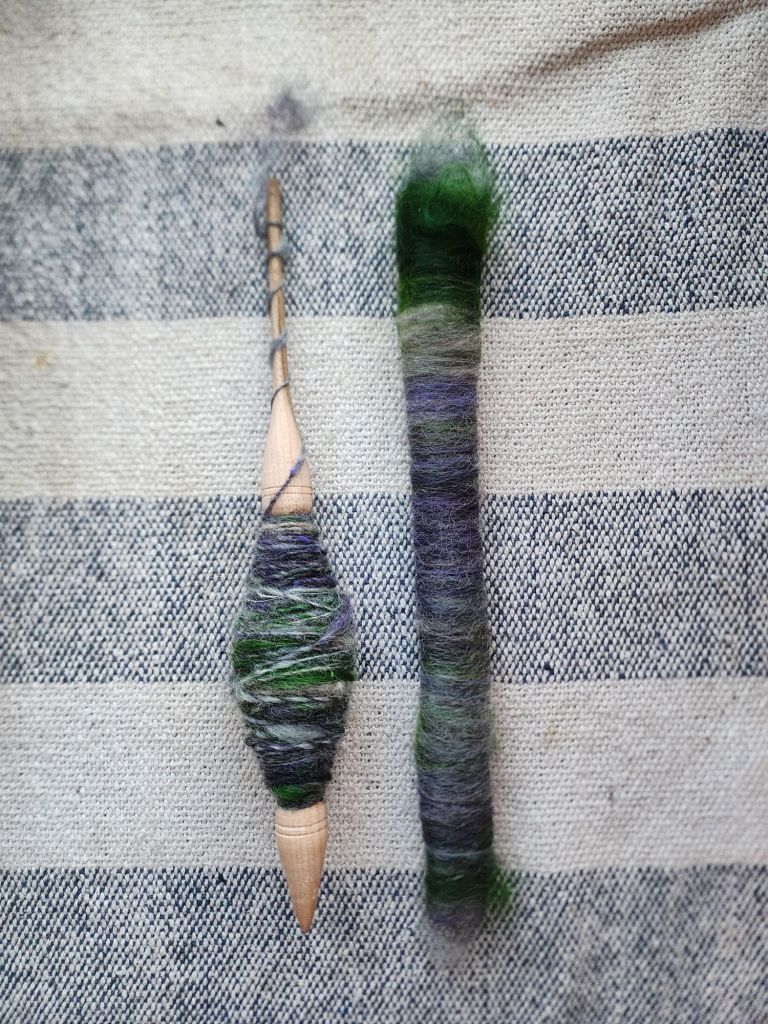
The increased flicking right at the get go makes me hesitate to offer this design for sale.
But something about this design was very fun and very smooth.
I kept grabbing for it again and again, and spun about 5 ounces over a few months just using this spindle!
I went back to the painting and wanted to experiment with the wider ends of the bobbin portion.
I also wanted to make it with mahogany next time as this wood looks quite a bit like mahogany to me.
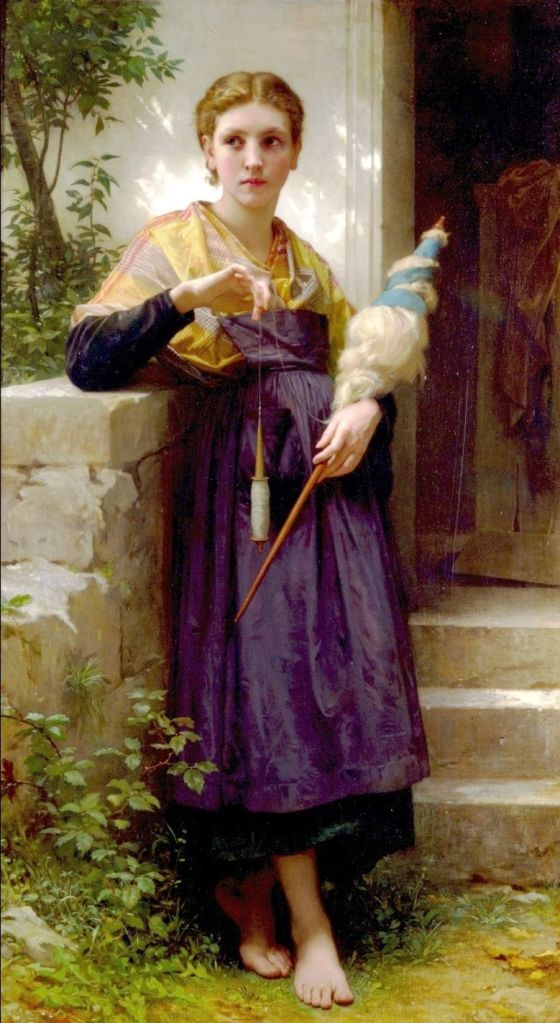
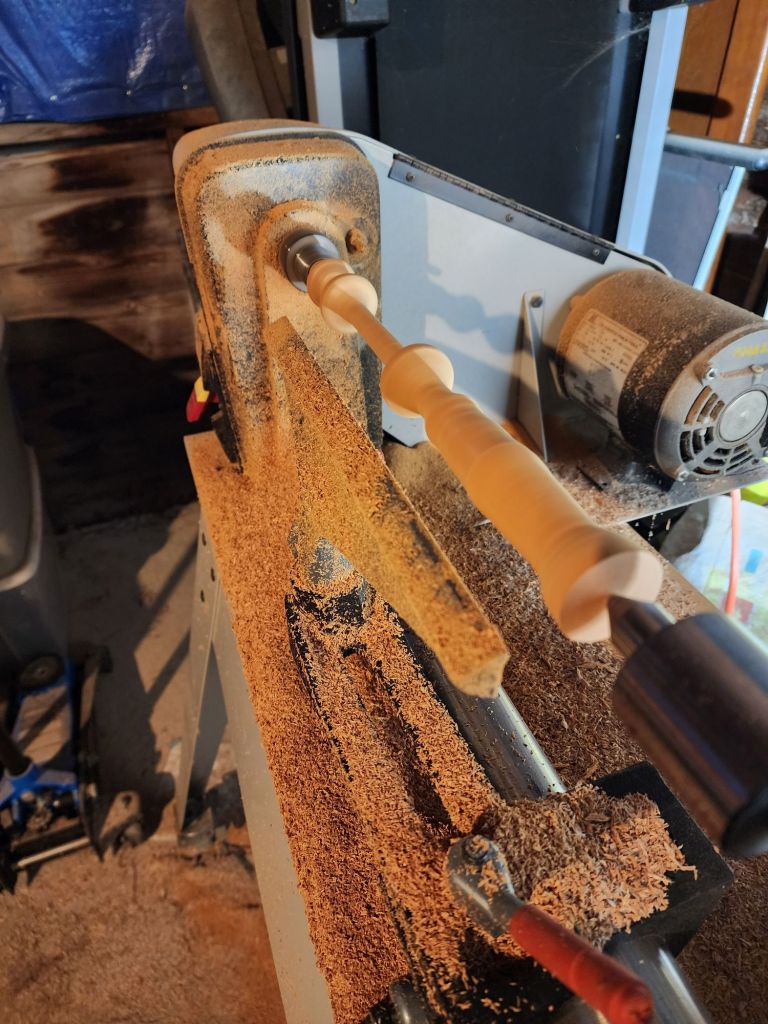
Back to the lathe I went!
I kept the tear drop shapes on the ends of the bobbin part and had the center of the bobbin part a little wider than the top of the spindle.
Mahogany is a very nice wood to work with, I had just started working with it at this point.
It came out really nice and was really nice to spin with!
I noticed the added weight made it spin beautifully right off the bat, and it worked really well as suspended like the painting or supported, which is very popular with modern spinners.
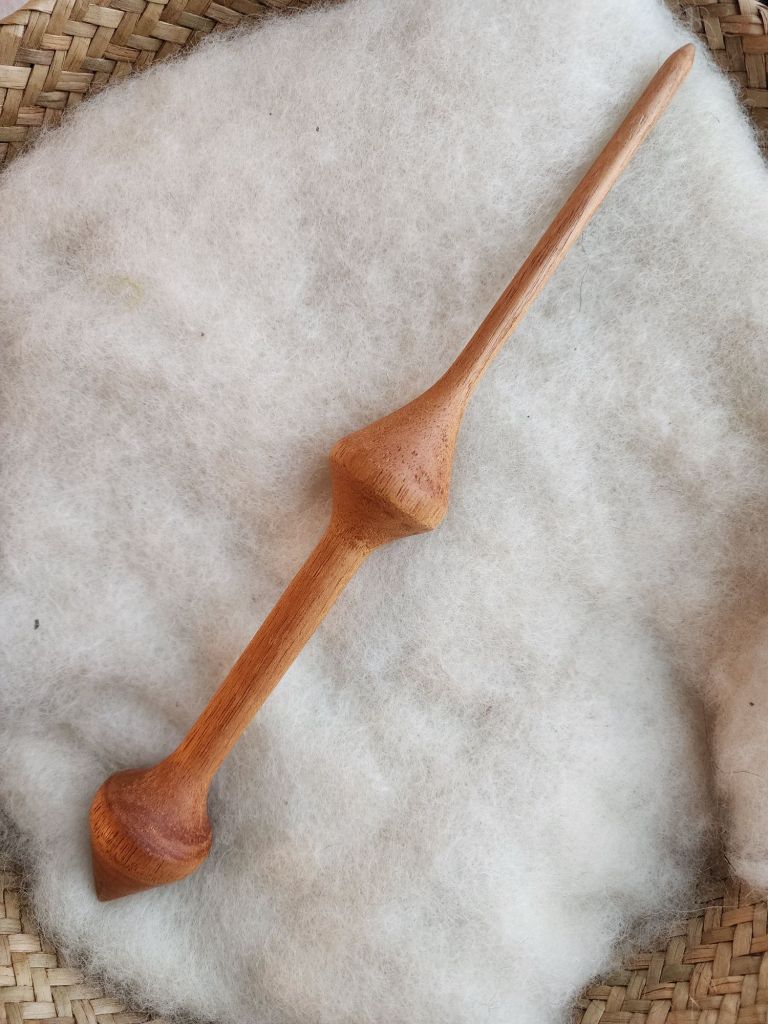
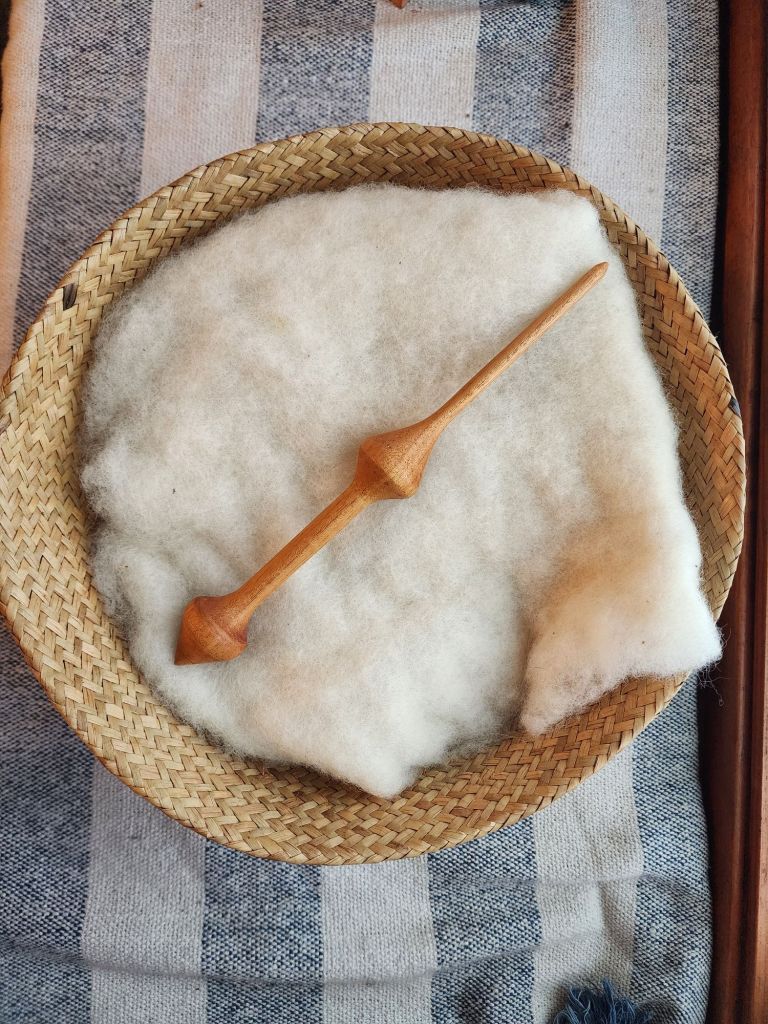
I offered it for sale on etsy, and have made and sold three now!
It’s going to be a design I offer for a good long while. But only when I have the time.
Since its from a larger piece of wood, it also takes a little longer than some pieces to carve into the larger width of wood. So it’s availability is touch and go – also due to its popularity!
As a hybrid between suspended and supported I think it’s a gorgeous option.
But, personally, as an almost exclusively suspended spinner I find it a bit on the heavy side for longer term spinning. Of course nothing really compares to being able to take a whorl off a slender medieval spindle!
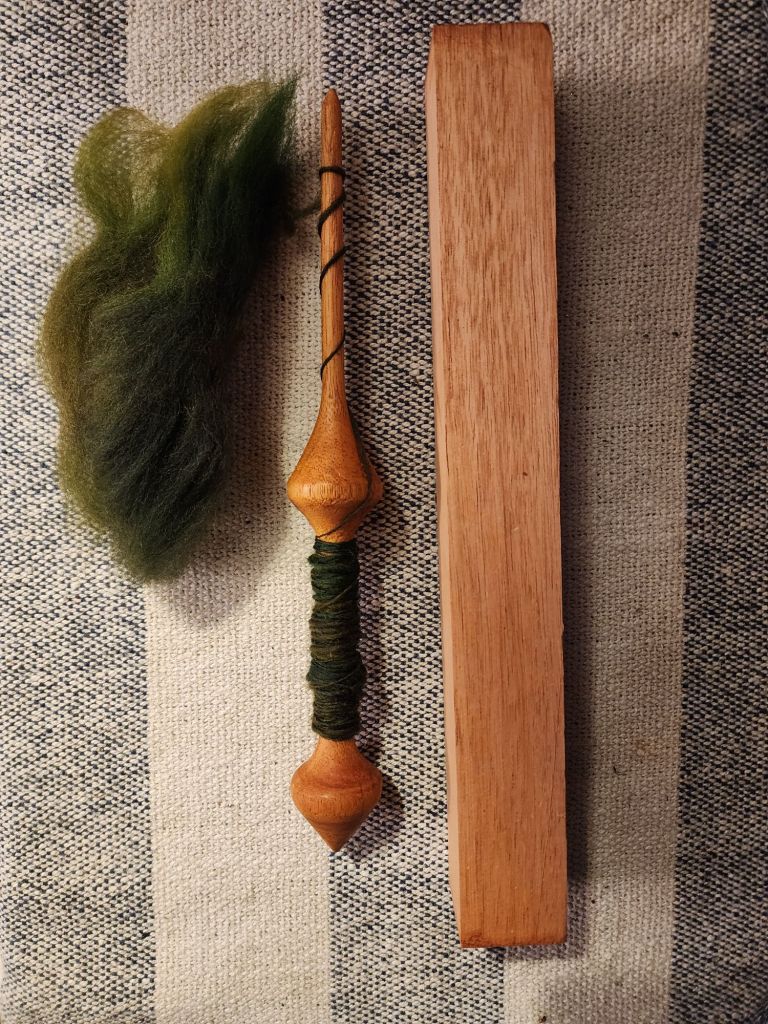
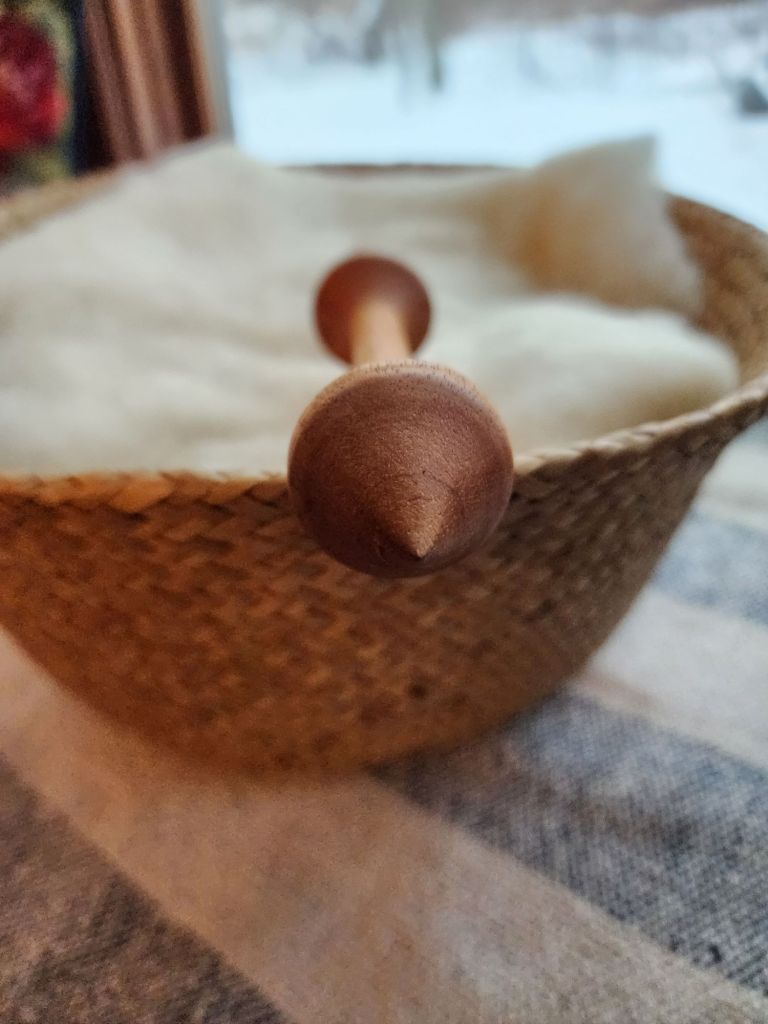
In the future I do want to play with this design a bit more.
I’m thinking I will shave down the tear drop shapes to imitate the painting better.
This has been a very fun adventure! Giving me two beautiful spindle designs, with hopefully more to come!
If you’d like to see if this is currently available in the etsy store, here is a link. French Bobbin Spindle Or you can reach out here, on etsy, or on social media and let me know you are interested in one and I’ll give you a timeline of when I can get the next one made.
Happy Spinning!
 The Apple Creek Farm
Leave a comment