I’ve got my story floating around all over on this website and social media!
But in a few bullet points:
– I got an antique spinning wheel, which made me look up historical spinning in greater depth
– I got into distaffs, which gave way to a drop spindle
– I couldn’t find someone selling medieval style spindles and whorls for a price and shipping that I wanted to pay so I made my own
– Then I proposed a Viking spinning class to a local fiber fest, which got approved
– I found a local wood worker to make the tools for me
– Sold the extras on etsy
– They were very popular so he made some more
– He didn’t have time to make more, so I made the decision to get a lathe and go for it myself!
– Holiday gift season hit! I made the simple stuff, he made the complicated stuff
Which brings us into the post holiday winter season!
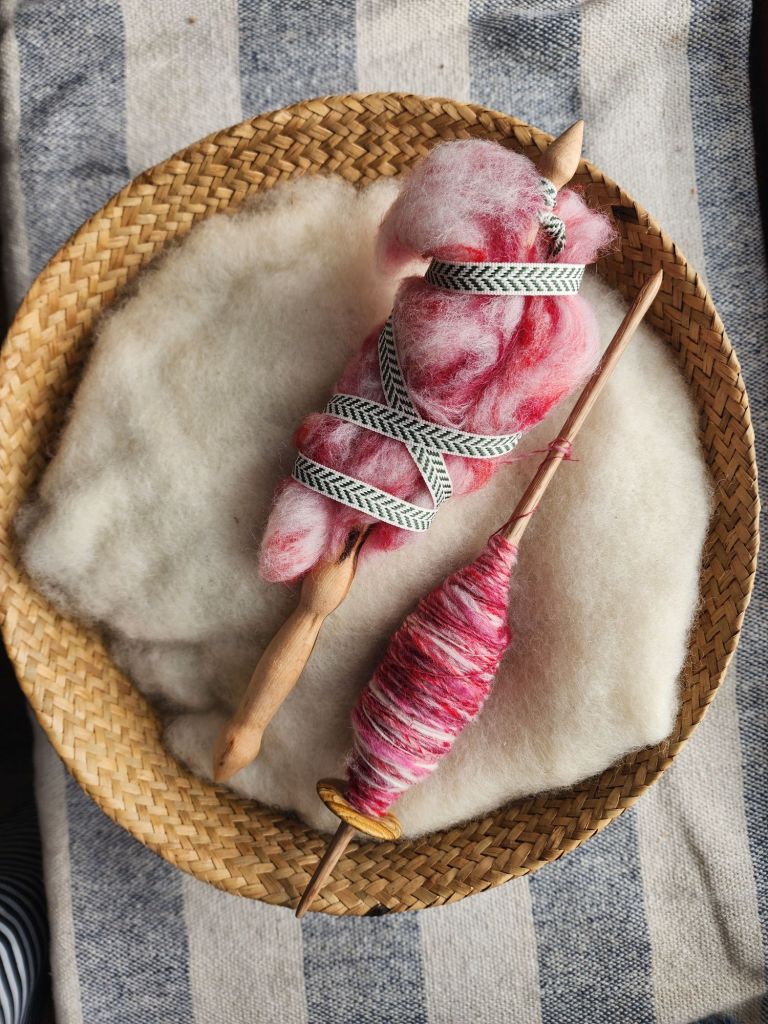
Now I am a well oiled machine when it comes to making medieval style spindles.
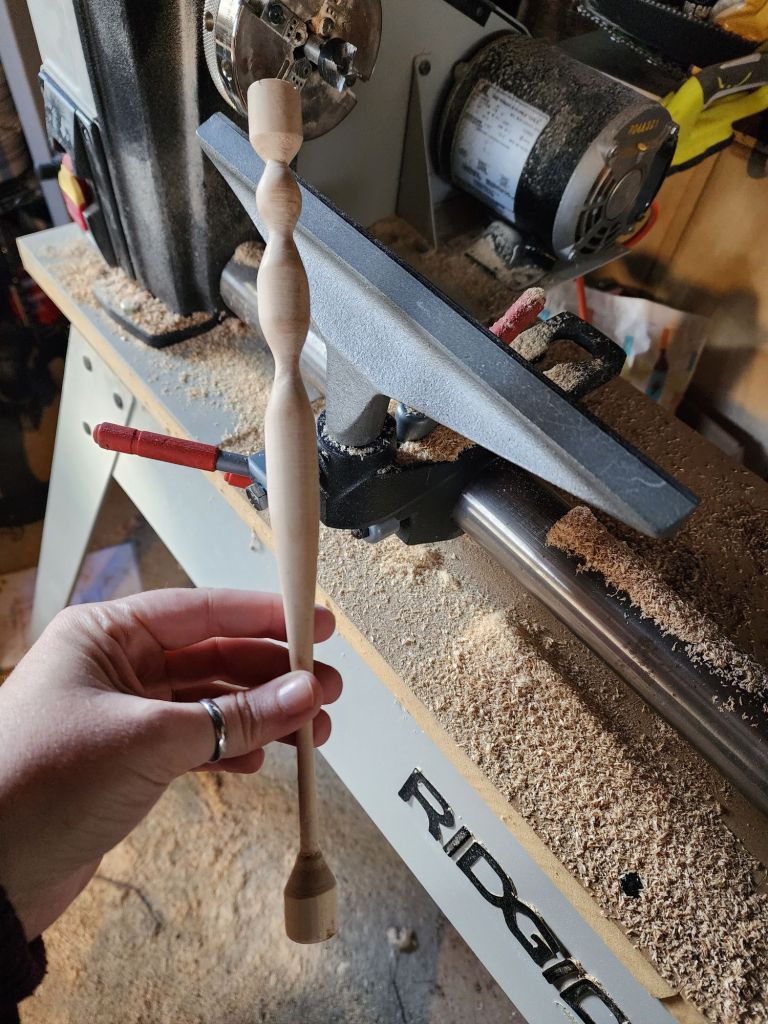
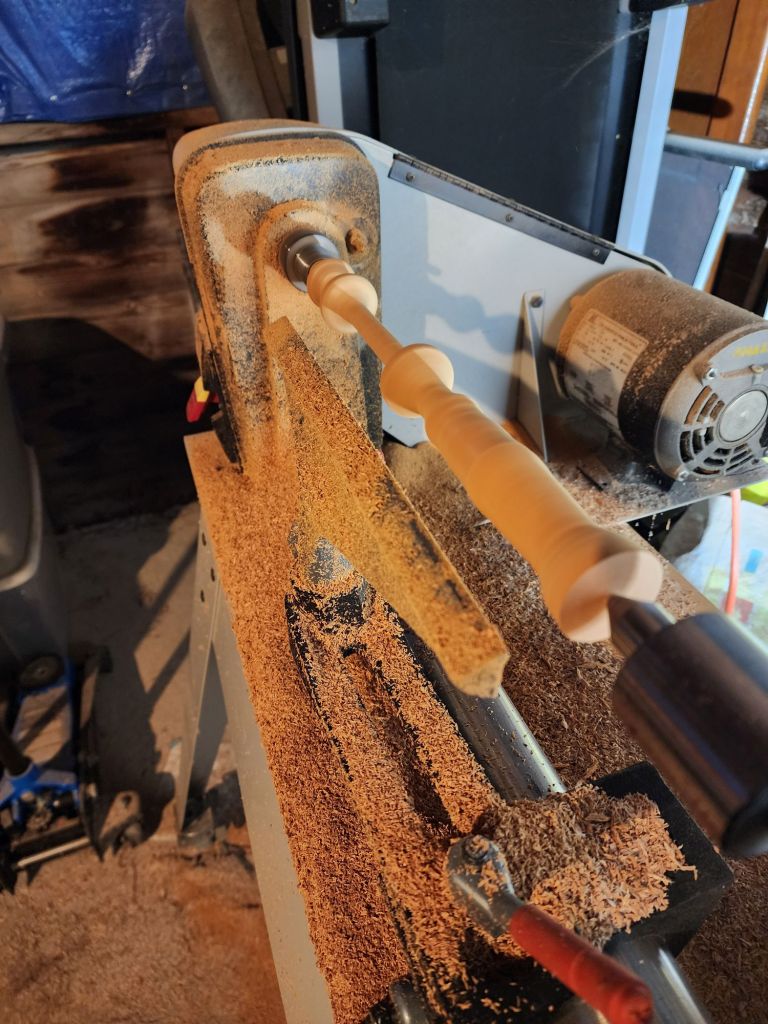
From a woodworking POV, they are actually quite difficult because the thinner something is on the lathe the harder it is to keep from shuddering when tooling.
I’ve learned to keep a light hand, sharp tools, and go slowly.
With a steady best selling item, I had a whole bunch of other spindle ideas I wanted to try!
One of which is the French Bobbin Spindle, which is a beautiful tool, and selling well.
But I want to move toward offering more supported spindles as well.
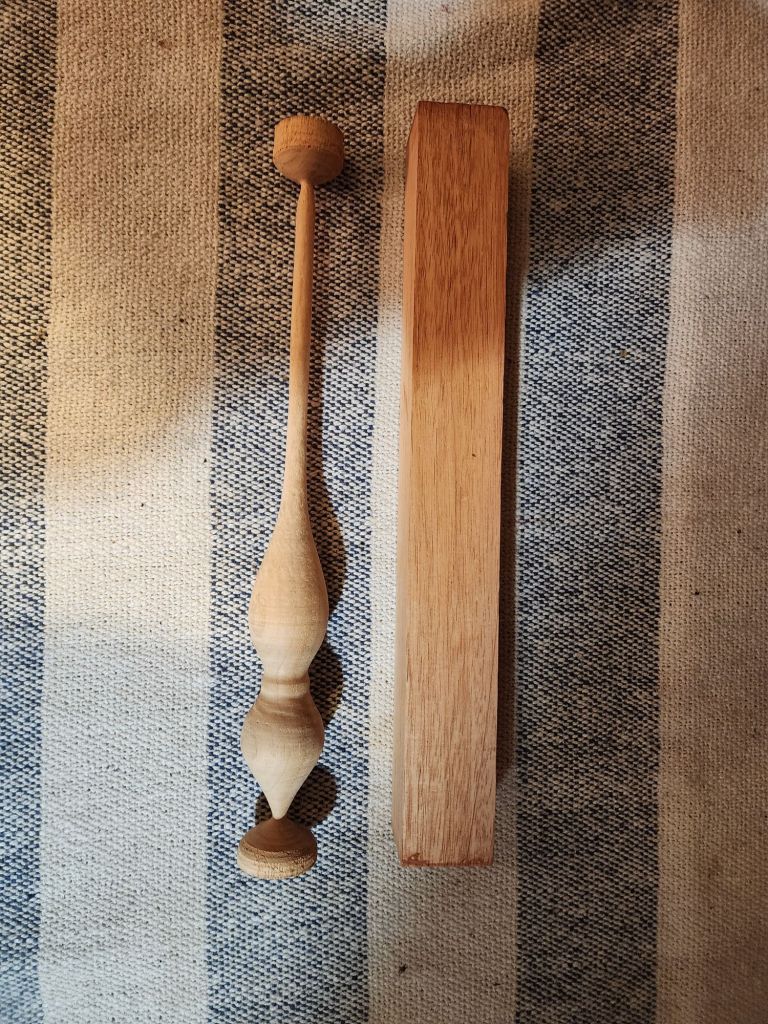
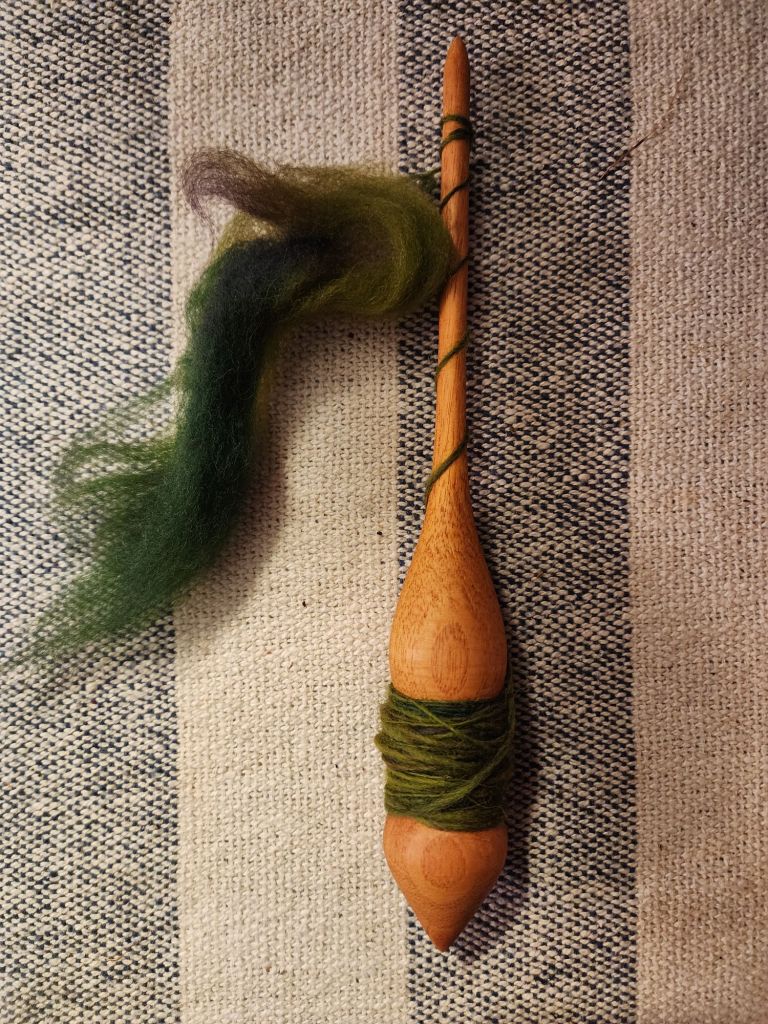
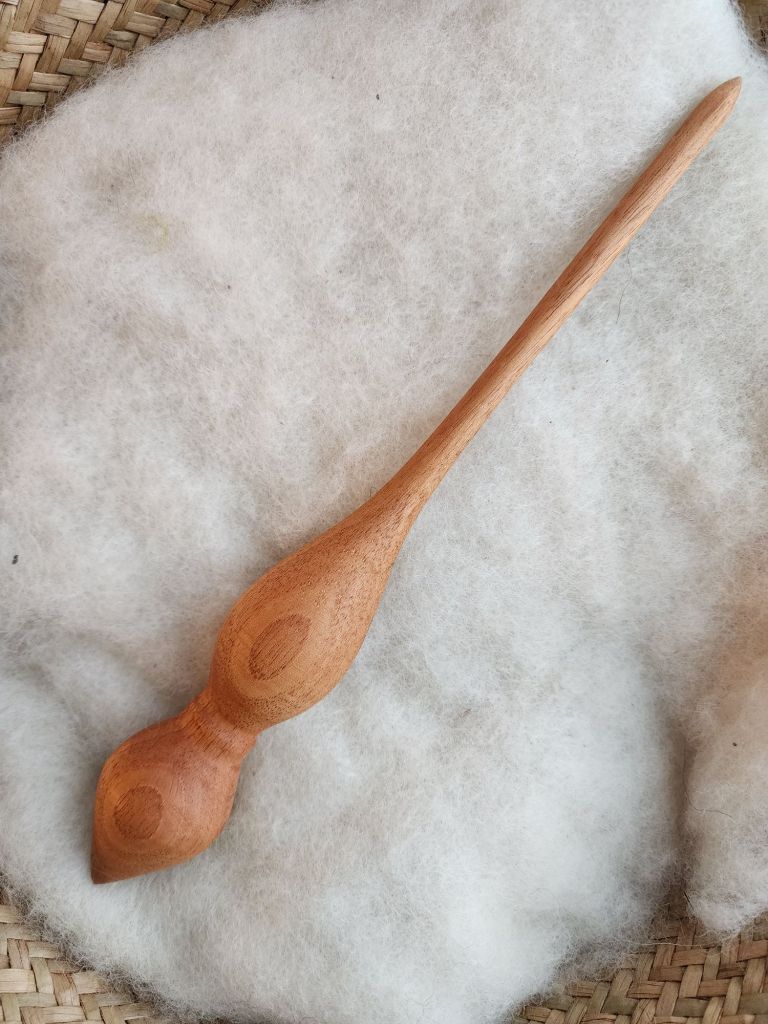
I got some 1.5 x 1.5 x 12 inch mahogany blanks and used one of them to make this guy! I will be making more of this design, with slight variation to ridge in the middle. It’s pretty, but I’m not attached to it. So it’ll depend on what the wood wants to do!
This particular spindle spun so smoothly. Just an A++!
I am going to have to make a separate post for spindle weight vs yarn gauge. Because everyone says “oh this lightweight spindle is for lace weight yarn” but my experience is actually the opposite! And there is another spindle maker who makes spindles this size and a bit heavier, and says they are Russian style lace spindles. So I am obviously not the only one to have that experience!
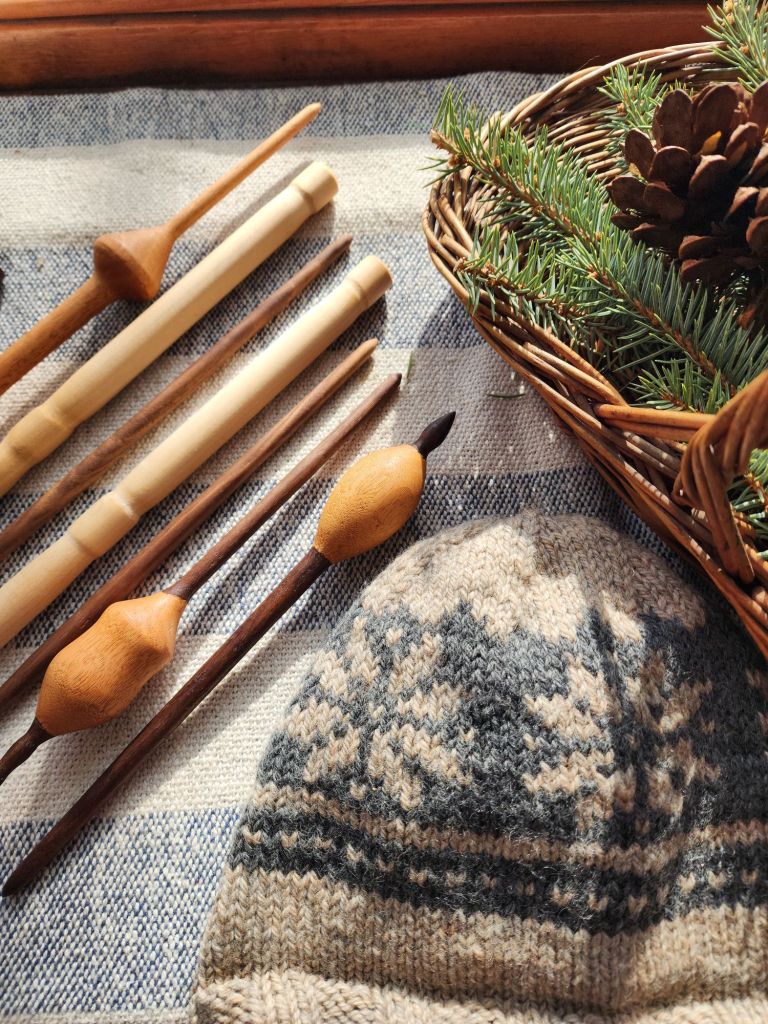
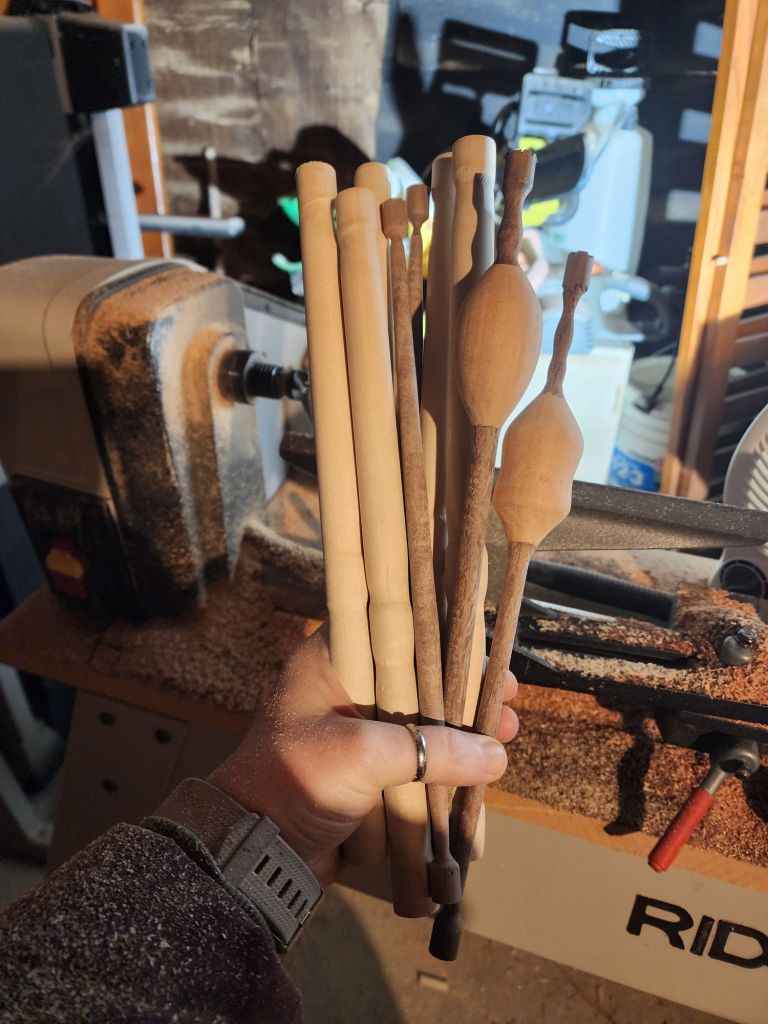
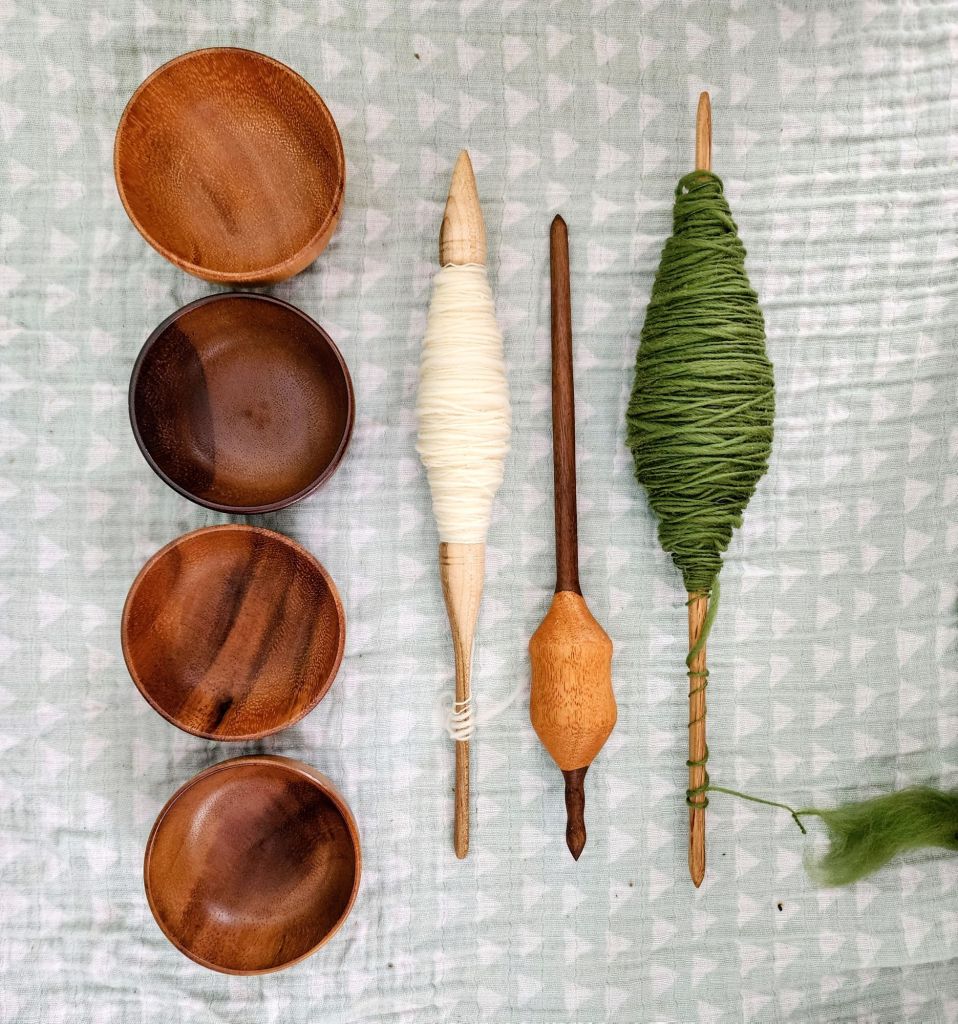
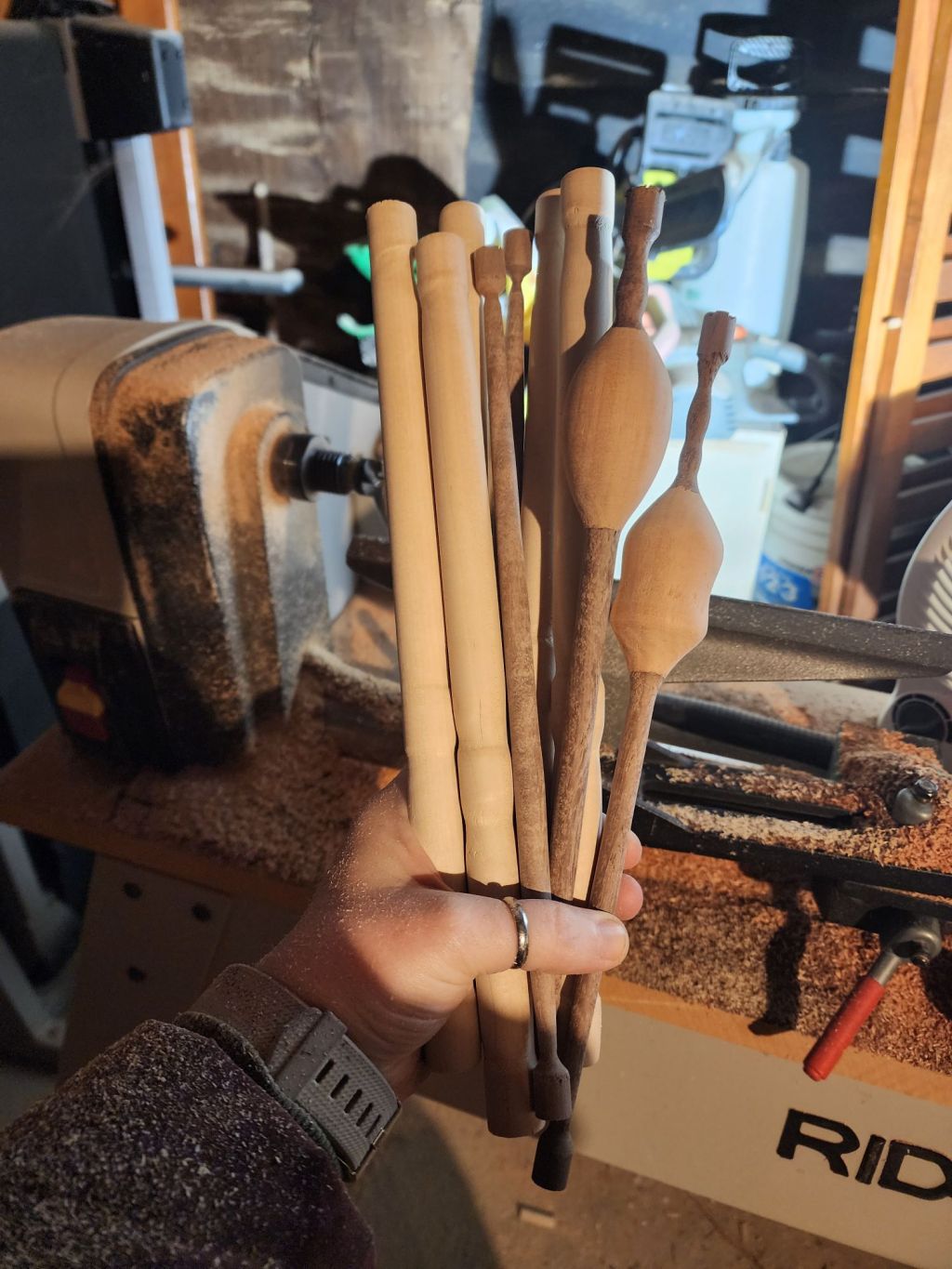
The next experiment was with these two walnut and mahogany supported spindles, the lower most two in this photo.
The one whose shape is a bit like an hourglass wobbles horribly, and I don’t think I can fix it. Although I do have one more thing to try before I fully give up on it.
But this one!
This one spins so true you can hardly tell it’s spinning! It’s unbelievably perfect!
And it sold in less than a week of listing, probably because I showed that crazy smooth spin in the listing video!
The egg shape is rather boring design wise, but in the future these would be fun to use the wood burning tool on
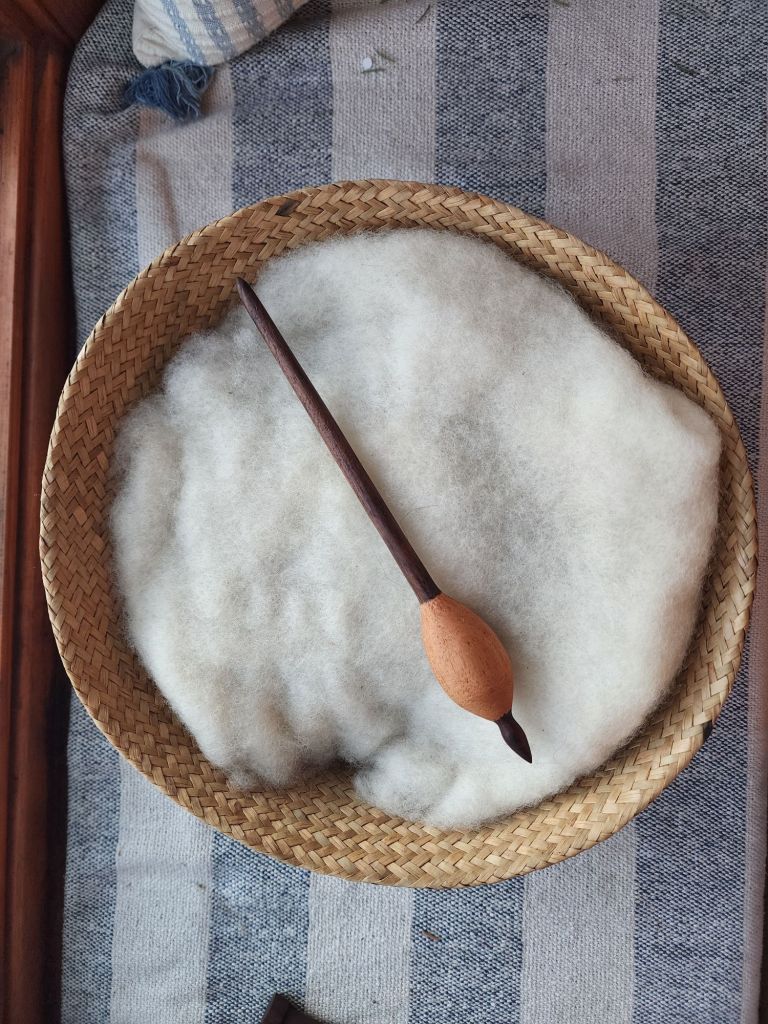
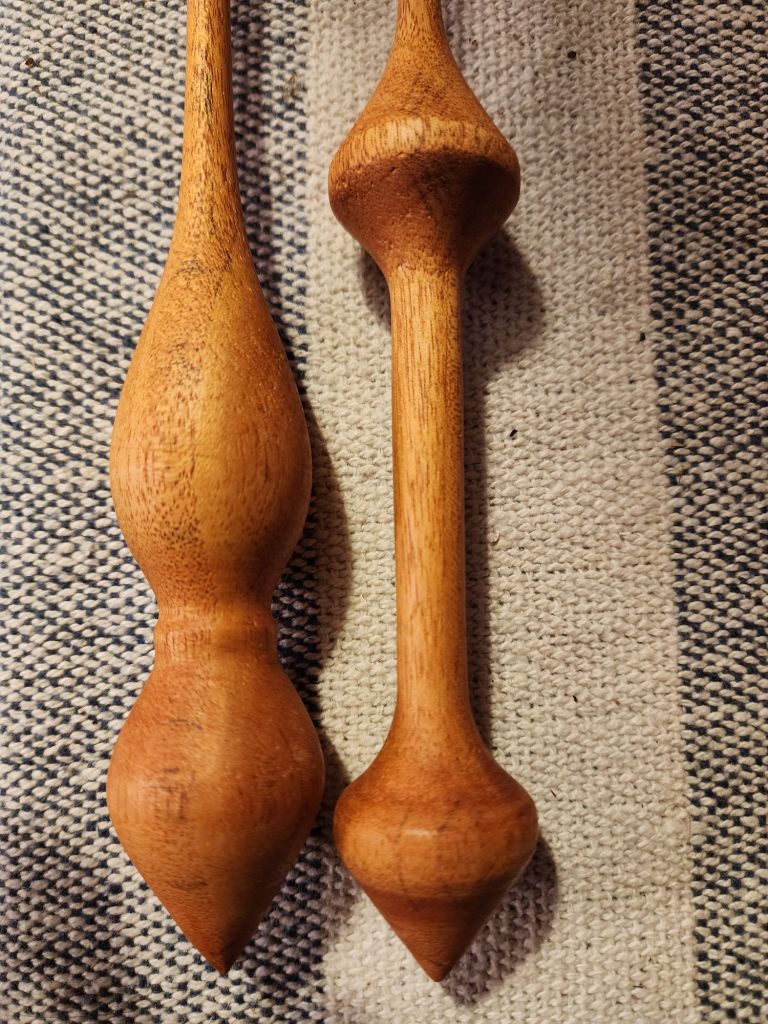
I’m really enjoying using mahogany. And customers have been gravitating to the darker woods since we first started selling spindles, so I know it’s a wood I’ll be using for a long time.
Supported spindles are used with a bowl. We were selling spindles with matching bowels over the summer, and they were so beautiful.
But, following this year’s overall theme of boundaries, I am not going to attempt to master the art of bowl turning this year.
So I’ve been thinking and thinking about what I would like to do about supported spindle bowls, especially as I start selling spindles at in-person events. People will need at least a few bowls available to test spindles, but then having bowls available to buy would also be a nice thing for someone trying a supported spindle for the first time.
I decided to go with commercial made wood bowls.
I was able to get these acacia wood bowls at a bulk price so I can add them to orders for people who would like one.
The multi-toned woods means it matches my supported spindles, either mahogany or walnut, or both!
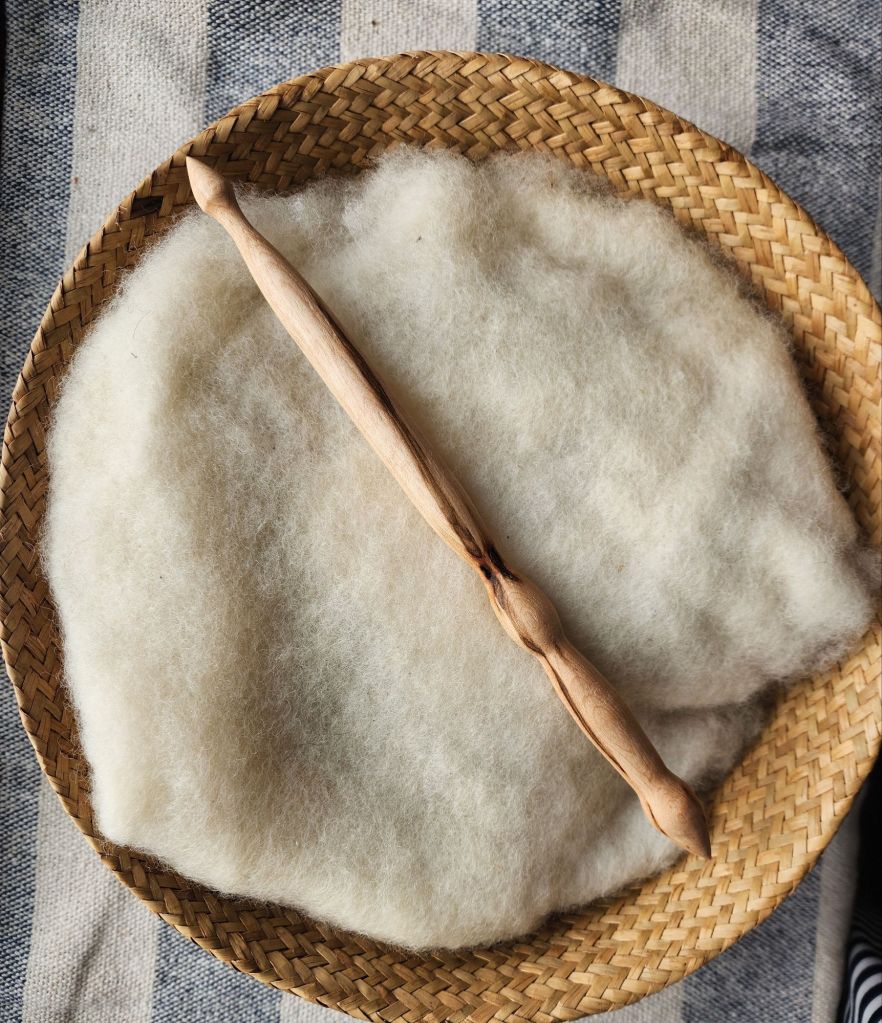
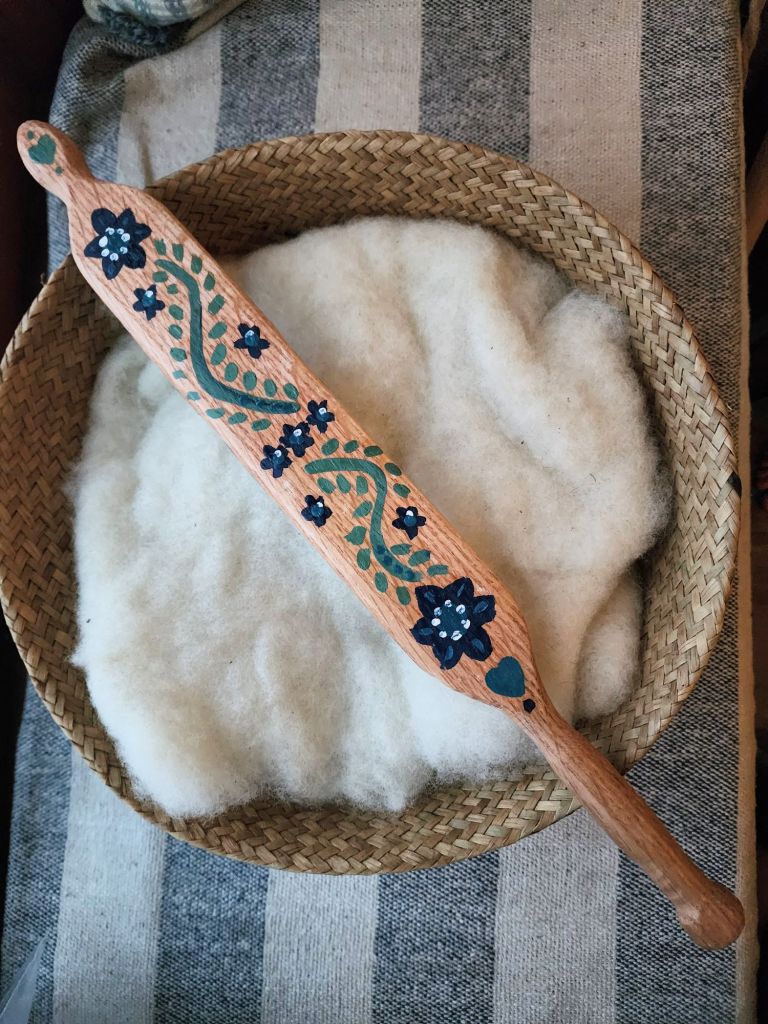
Even without launching into making bowls, there are still a ton of fiber arts tools I can and do make! This Mini Hand Distaff is a new one for 2026, it’s an upgraded version of the Viking kit distaff. It was so fun to make! I bought a bunch of maple for them, and most pieces have these beautiful dark veins. I also use this maple for crochet hooks, pretty and very strong to hold that hook shaped end! The Folkart Distaff I secretly call The Lathe Killer. The set up I have for making thin spindles gets all janky when I am working with the large oak pieces needed for these big distaffs, and I’ve gotta read adjust after every one. But they’re really fun to use and even to paint! And I’m still working on various other spindle designs, hopefully some fun ones for the future!
I have gotten a bit discouraged in this new skill at times.
Woodworking isn’t coming to me quite as easily as fiber arts.
But! A woodworker I was talking to encouraged me to keep at it. It’s a skill that develops slowly over time, and when I’ve got multiple decades of experience under my belt like he does a lot of these little kinks will be easy peasy!
I’m continuing to embrace the dust!
I’m currently working on a big (for me) contract with a major University’s History Department, and I have a new second local wood worker friend who is starting to make some fiber tools following our designs as we head into vendor market season.
Really amazing and big things!
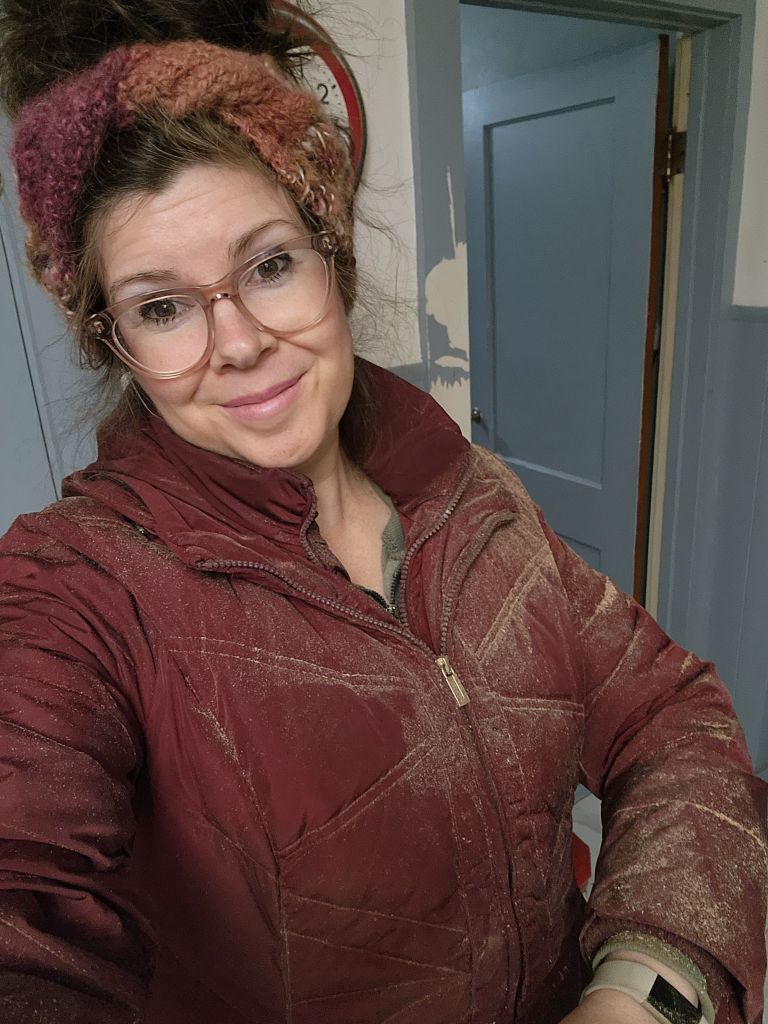
In the meantime I am so very excited that the weather is starting to warm up a bit because my lathe is in an old garage, and it’s been a very, very cold winter in there! We do have two old workshops on our property, both have very nice working woodstoves in them! So maybe by next winter I can move my woodworked endeavors into a more comfortable spot!
I don’t quite have lathe dust (or do we still call it saw dust?) in my veins, but I can tell you what walnut dust tastes like lol!
Happy spinning! For lathes or spindles!
Ann
 The Apple Creek Farm
Leave a comment